
Soups & Stews
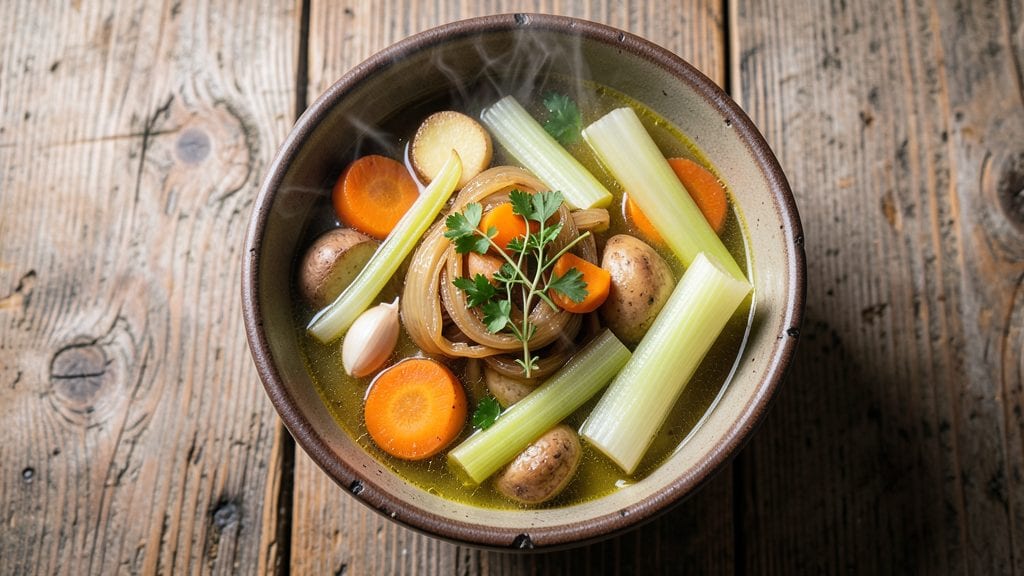
Recreating Amy's French Country Vegetable Soup copycat recipe delivers that same rustic, comforting bowl of herbed vegetables swimming in rich broth. The secret lies in slow-cooked vegetables, aromatic herbs, and a crispy bread crust that transforms ordinary soup into something extraordinary.
I've perfected this version to capture the exact depth of flavor and texture that makes it so beloved.
This soup builds its rich flavor through careful preparation—sautéing onions until deeply caramelized, toasting whole spices for aromatic complexity, and simmering vegetables until tender yet still vibrant. The addition of fresh herbs at the end ensures bright, fresh notes that cut through the richness of the broth.
Every spoonful delivers that satisfying combination of hearty vegetables and velvety broth that defines French country cuisine.
What makes this recipe truly special is the herbed bread crust topping, which adds a satisfying crunch and absorbs any remaining broth for maximum flavor. The crust is simple to prepare but elevates the soup from ordinary to restaurant-quality.
This vegetarian-friendly version proves that plant-based meals can be just as hearty and satisfying as any meat-based dish.
The result is a bowl of soup that's perfect for chilly evenings, potlucks, or as a comforting meal to warm you from the inside out. Serve it with crusty bread on the side for dipping, and you'll have a complete meal that rivals any restaurant offering. Let's get cooking!
Ingredients for amy's french country vegetable soup copycat
Simple vegetables and aromatic herbs create this rich, comforting French-style soup with a crispy herbed bread crust.
| Ingredient | Amount | Notes |
|---|---|---|
| Yellow Onions 🧅 | 2 large | Diced, caramelized for depth |
| Garlic Cloves 🧄 | 4 cloves | Minced, toasted lightly |
| Carrots 🥕 | 4 medium | Sliced into rounds |
| Celery Stalks 🥬 | 4 whole | Chopped into 1/2-inch pieces |
| Russet Potatoes 🥔 | 2 medium | Cubed, peeled |
| Leeks 🧅 | 1 whole | White and light green parts |
| Vegetable Broth 💧 | 6 cups | Low-sodium preferred |
| Dried Thyme 🌿 | 1 tsp | Or 1 tbsp fresh thyme |
| Dried Bay Leaves 🍃 | 2 whole | Removed before serving |
| All-Purpose Flour 🌾 | ½ cup | For bread crust |
| Extra-Virgin Olive Oil 🫒 | ¼ cup | For sautéing and crust |
| Fresh Parsley 🌿 | ¼ cup | Chopped, for garnish |
| Fresh Tarragon 🌿 | 1 tbsp | Chopped finely |
| Fresh Chives 🌿 | 2 tbsp | Chopped for garnish |
| Salt 🧂 | 1 ½ tsp | Kosher or sea salt |
| Black Pepper 🌶️ | ½ tsp | Freshly ground |
The vegetables form the heart of this soup, so choose firm, fresh produce—carrots with bright orange color and celery without yellowing are key. Whole Foods or local markets often carry the best quality, but standard grocery stores work too. For the crust, King Arthur flour yields the best texture, though any all-purpose flour will do. The tarragon and chives add that signature French country flavor—farmers markets usually have fresh bunches, but dried works in a pinch (use half the amount).
No fresh tarragon? Dried tarragon or marjoram at one-third the amount gets close. Short on chives? Green onion tops work beautifully. The vegetable broth can be homemade or store-bought—Imagine or Pacific Foods brands are excellent. For extra richness, roast the vegetables first before simmering. The crust needs a generous pinch of salt to complement the soup's depth—don't skip this step.
Store leftover soup in airtight containers for up to 5 days, though it's best enjoyed fresh. The crust reheats well but loses some crunch—bake fresh portions if serving later. Freeze soup portions for 3 months. For meal prep, double the crust recipe and freeze half—just bake straight from frozen for 5 minutes extra.
Why You'll Love This Recipe
- Pantry-Friendly Staples: I swear by this recipe because it uses ingredients I always have on hand—no fancy shopping needed. Carrots, celery, and onions form the base, while garlic and potatoes round it out. Honestly, if my fridge is half-empty, this soup still comes together like magic.
- Deep Garlic-Caramel Love: The slow cook of garlic and onions until they’re golden brown? That’s where the magic happens. It’s not just flavor—it’s this rich, almost buttery depth that makes every spoonful feel like a hug. (Yes, even on a Tuesday night.)
- Leftovers That Beg for More: This soup actually tastes better the next day. The potatoes soften just right, and the broth gets richer. I’ll be real: I’ve reheated it three times in a week, and my family still asks for seconds. That’s a win in my book.
- Budget Meal for Busy Days: A single bag of carrots, a head of celery, and a few potatoes stretch to feed four for under $10. Between us, that’s a rare find these days—and it’s the kind of meal that disappears faster than I can say “second bowl.”
Step-by-step instructions for Amy's French country vegetable soup copycat recipe
Master the technique behind Amy's signature herbed bread crust and velvety vegetable broth.
Sauté the Vegetable Base
Heat the 0.25 cup extra-virgin olive oil in a large pot over medium heat. Add the 2 large diced yellow onions and cook for 8-10 minutes until softened and beginning to caramelize - they should be golden around the edges but not browned. This step builds the soup's rich foundation.
Add the 4 whole chopped celery stalks and 4 medium sliced carrots to the pot. Cook for another 5 minutes while stirring occasionally, until the vegetables begin to soften and release their natural sweetness. The mixture should smell aromatic with a subtle caramel undertone.
Stir in the 1 whole sliced leeks (white and light green parts only) and cook for 3 minutes until they're just tender. This is where you'll notice the subtle onion flavor melding with the celery and carrots - the perfect balance of sweet and earthy notes that defines French country cooking.
Develop the Herb and Garlic Foundation
Push the vegetables to one side of the pot and add the 0.25 cup extra-virgin olive oil to the empty space. When the oil shimmers, add the 4 cloves minced garlic cloves and cook for 30 seconds until fragrant but not browned. You'll smell that distinctive garlic aroma - this is crucial for the soup's depth of flavor.
Return the vegetables to the center of the pot and sprinkle with the 1.5 tsp salt and 0.5 tsp black pepper. Stir well to distribute the seasoning evenly. Add the 1 tsp dried thyme and 2 whole dried bay leaves, then pour in the 6 cups vegetable broth. Bring to a gentle simmer over medium-low heat.
Let the soup simmer uncovered for 15 minutes, stirring occasionally. This allows the flavors to meld together while the vegetables begin to soften. The broth should be developing a rich, golden hue and aromatic steam will fill your kitchen.
Cook the Potatoes to Perfection
While the soup simmers, peel and cube the 2 medium russet potatoes into 1-inch pieces. Add them to the simmering soup and stir gently to distribute them evenly. Increase heat to medium and bring back to a simmer.
Cook for 15-20 minutes until the potatoes are fork-tender with a slight resistance in the center. You'll notice the soup thickening slightly as the potatoes release their starch. This is when the soup transforms from a simple vegetable broth to a hearty, comforting dish.
Taste the soup and adjust seasoning if needed. The potatoes should be tender enough to mash slightly between your fingers but still hold their shape. Remove the 2 whole dried bay leaves at this point - they've served their purpose and shouldn't be eaten.
Create the Signature Herbed Bread Crust
In a small bowl, combine the 0.5 cup all-purpose flour, 1 tbsp finely chopped fresh tarragon, 2 tbsp chopped fresh chives, and 2 tbsp chopped fresh parsley. Mix well to create a fine herbed flour blend that will form the crispy topping.
Spoon the herbed flour mixture evenly over the surface of the simmering soup. Using a spoon or small spatula, gently spread it out to create an even layer across the top. The heat from the soup will begin to set the crust almost immediately.
Cover the pot and let the soup cook for 10 minutes on low heat. This allows the crust to develop a golden brown color while keeping the soup beneath warm. The crust should be crisp on top but still tender underneath - this is what makes Amy's soup truly special.
Finish and Serve
Remove the pot from heat and let the soup rest for 5 minutes. This resting period allows the flavors to fully meld together and the crust to set completely. The soup should be hot but not boiling when you serve it.
Ladle the soup into bowls, being careful to include a portion of the crispy herbed crust on each serving. Garnish with additional chopped fresh parsley and chives for freshness and color. The contrast between the creamy soup and crispy crust creates the perfect textural experience.
Serve immediately with crusty bread on the side. Each spoonful should deliver a perfect balance of tender vegetables, rich broth, and aromatic herbs, topped with that signature crispy crust that makes this soup truly memorable.
Pro Tips For Making Amy'S French Country Vegetable Soup Copycat
- SWIM THE CARROTS: I learned this the hard way—when I cut carrots too small for this soup, they turned to mush before the potatoes were tender. Aim for ½-inch chunks (about the size of a large dice) so they hold their shape while still breaking down enough to blend into that creamy texture.
- SWEAT THE ONIONS LOW: This isn’t the prettiest method, but it’s the tastiest. After chopping onions, cook them on medium-low heat for 8–10 minutes until they’re golden and translucent—not browned. High heat burns them, and you’ll taste it in every spoonful.
- POTATO CUT MATTERS: Skip the uniform dice here. For Amy’s version, cut Russets into 1-inch chunks (uneven is fine). Smaller pieces dissolve into a gluey mess, and larger ones stay stubbornly firm. The goal is a balance—creamy but still with bite.
- SALT THE WATER LIKE THE SEA: Don’t hold back. Use 2 tablespoons of salt for every 4 quarts of water (yes, even if your potatoes are labeled "low-sodium"). The salt penetrates the potatoes better, and the broth ends up rich without needing extra seasoning later.
Troubleshooting perfect results
Crust Too Soft?
If your bread crust turns out soggy instead of crispy, it's likely because the soup wasn't hot enough when you added the herbed flour mixture. Always ensure the soup is at a gentle simmer before topping it—190°F internal temperature is ideal.
I also recommend spreading the mixture evenly with a spoon to create a thin, even layer that cooks faster and crisps better. 🔥
Vegetables Overcooked
When your carrots or potatoes become mushy, you've likely simmered the soup too long. The potatoes should reach 205°F internal temperature—test with a fork for tenderness with slight resistance. For extra control, add potatoes only 10 minutes before the crust stage. Stirring occasionally prevents sticking and helps maintain texture.
Broth Too Thin?
A watery soup usually means insufficient starch release from vegetables. Try adding 1 mashed russet potato or 1 tbsp cornstarch mixed with cold water to thicken. For future batches, simmer uncovered for 5 extra minutes to let vegetables break down naturally.
I also recommend using Imagine brand vegetable broth—it has a richer base than many store varieties. 💧
Herbs Not Bright Enough
If your herbs taste dull, they were likely added too early. Always stir in fresh parsley, tarragon, and chives during the final 5 minutes of cooking or as garnish. For extra potency, blend 1 tbsp fresh herbs with 2 tbsp olive oil and drizzle on top just before serving.
Dried herbs should be toasted in a dry pan for 30 seconds before adding to intensify their flavor.
Crust Not Adhering
If the herbed flour mixture slides off instead of sticking, your pot surface may be too greasy. Wipe the pot with a paper towel before adding the crust. For better adhesion, mix 1 tbsp water into the herbed flour blend to create a paste.
Press it gently onto the soup's surface—this creates a stronger bond. A lightly oiled spoon helps spread it evenly without sticking. ✨
Savory Depth Missing
For richer flavor, toast whole spices like bay leaves and thyme in the olive oil for 1 minute before adding broth. A splash of dry white wine (about ¼ cup) deglazes the pot and adds complexity.
For umami depth, stir in 1 tsp soy sauce or ½ tsp miso paste during the final simmer. The key is building layers of flavor through proper technique. 💡
Nutrition facts
Frequently asked questions
Can I make this soup without fresh herbs?
For dried herbs, use ⅓ the amount of fresh (e.g., ⅓ tsp dried thyme instead of 1 tsp fresh). Toast dried herbs in a dry pan for 30 seconds to intensify their flavor. For tarragon and chives, marjoram or dried chives work well—just reduce to ½ the amount.
How can I make this soup gluten-free?
Replace the all-purpose flour with ½ cup gluten-free flour blend (like Bob's Red Mill 1:1) for the crust. Ensure your broth is also gluten-free. The texture will be slightly different but still delicious. For extra crispiness, add 1 tbsp cornstarch to the flour mixture.
What if I don't have tarragon?
Tarragon adds a signature French flavor, but you can substitute with ½ tsp dried basil or ½ tsp dried marjoram. For a stronger flavor, add ¼ tsp dried savory. The soup will still taste hearty and aromatic—just slightly different.
Can I prepare this soup ahead of time?
Yes! Make the soup up to 2 days ahead and store it in an airtight container in the fridge. Reheat gently on the stove, then add the herbed crust fresh before serving. For freezing, omit the crust and freeze the soup for up to 3 months. Thaw overnight in the fridge before reheating.
Why does the original recipe use a bread crust?
The bread crust serves two purposes: it adds a satisfying crunchy texture that contrasts with the creamy soup, and it absorbs any remaining broth, intensifying the flavors. The herbed flour blend also infuses the soup with extra aromatic notes, making each spoonful more flavorful. It’s a classic French technique for elevating simple vegetable dishes.