Soups & Stews
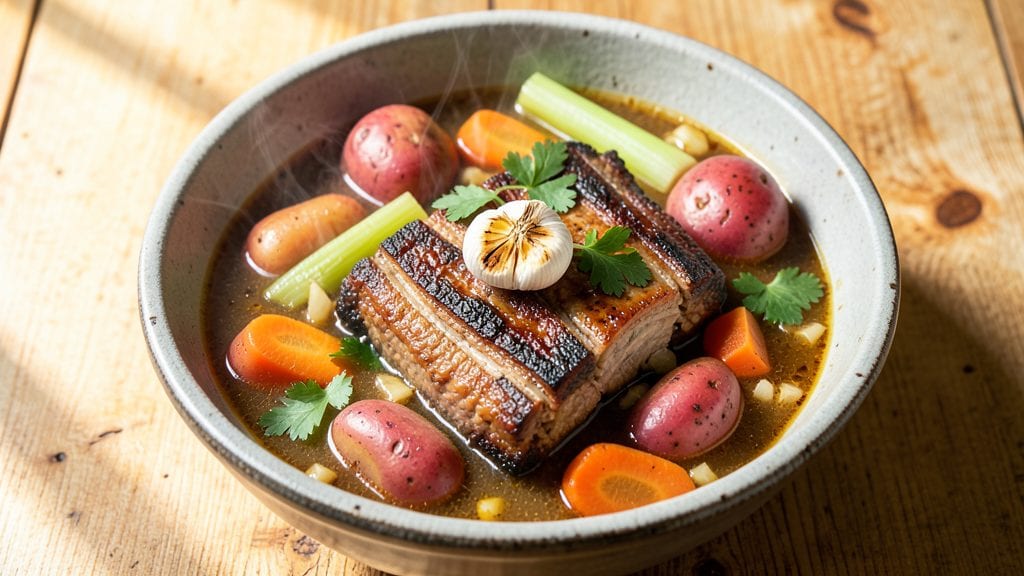
Slow-cooked ribs soup transforms tough cuts into tender, melt-in-your-mouth meatfall that clings to every spoonful of rich, aromatic broth.
This recipe builds flavor through a 3-hour simmer, where ribs break down into succulent strands while absorbing the essence of onions, garlic, and herbs—creating a dish that’s hearty enough for a family dinner but refined enough for company.
The key lies in low-and-slow cooking, where patience pays off in layers of depth that store-bought versions simply can’t match.
What sets this ribs soup apart is the balance of textures: tender meatfall, fork-tender vegetables, and a velvety broth that’s neither greasy nor watery.
We start with a deep, flavorful base—caramelized onions and garlic—then layer in ribs, potatoes, and carrots for a one-pot meal that requires minimal effort after the initial prep. The result is a soup that’s restaurant-quality at home, where every bite delivers both comfort and sophistication.
By the time you’re ready to serve, the ribs will have fallen apart into meatfall strands, the broth will be thickened just enough to coat the back of a spoon, and the aroma will fill your kitchen with warmth.
This isn’t just a soup—it’s a foolproof method for turning tough cuts into something luxurious, proving that slow cooking can be both simple and spectacular.
Serve with crusty bread to soak up every last drop of that rich, herb-infused broth. The leftovers? Even better the next day, as flavors deepen and the meat becomes even more tender. Let’s get cooking—your taste buds will thank you.
Ingredients for ribs soup
Simple ingredients that transform into restaurant-quality ribs soup with melt-in-your-mouth meatfall.
| Ingredient | Amount | Notes |
|---|---|---|
| Beef Ribs 🥩 | 2 lb | Bone-in, meaty cuts preferred |
| Yellow Onions 🧅 | 2 whole | Medium-sized, chopped |
| Garlic Cloves 🧄 | 6 cloves | Peeled, roughly chopped |
| Russet Potatoes 🥔 | 2 lb | Peeled, cubed into bite-size |
| Carrots 🥕 | 1 ½ lb | Peeled, cut into chunks |
| Celery Stalks 🌿 | 3 whole | Chopped, with leaves included |
| Tomato Paste 🍅 | ½ cup | No added salt |
| Beef Broth 💧 | 4 cups | Low-sodium preferred |
| Red Wine 🍷 | 1 cup | Bold, dry variety |
| Bay Leaves 🌿 | 2 whole | Fresh preferred |
| Fresh Thyme 🌿 | ¼ cup | Leaves only, chopped |
| Salt 🧂 | 1 ½ tsp | Kosher or sea salt |
| Black Pepper 🌶️ | ½ tsp | Freshly ground preferred |
| Olive Oil 🫒 | 2 tbsp | Extra-virgin for richness |
The ribs are the star—look for meaty cuts with good marbling at your local butcher. Costco or Whole Foods often have great options, but any grocery store with a meat counter will do. Onions, carrots, and celery should be fresh and firm—no rubbery celery or sprouting potatoes. The tomato paste? Trader Joe's has the best prices, and it keeps for months in the pantry. Fresh thyme makes all the difference, but dried works in a pinch (use half the amount).
No red wine? Beef broth with a splash of balsamic vinegar works just as well. Prefer low-sodium broth? Add an extra pinch of salt to balance flavors. The potatoes can be Yukon Gold if you want extra creaminess, but Russets hold up perfectly. Carrots? Baby carrots work, but whole carrots add better texture. The meatfall happens best with slow cooking—don’t rush this—it’s worth the wait for that luxurious texture.
This soup tastes even better the next day—plan ahead and make extra. Store in the fridge for 4-5 days or freeze portions for 3 months. I like to portion it into containers so I can grab a bowl straight from the freezer. The broth thickens as it cools, so add a splash of water or broth when reheating if it’s too stiff.
Why You'll Love This Recipe
- Tough-Cut Magic: I swear by beef ribs in soup—they fall apart just enough to coat every spoonful in rich, meaty goodness. No need to tenderize hours ahead; the slow simmer does the work while you sip wine and pretend you’re not cooking.
- Onion-Garlic Bomb: That first whiff of caramelized onions and garlic? It’s basically a flavor hug. I don’t skimp—sauté them until the onions are sticky and the garlic’s golden, because that’s where the soul of the soup lives.
- Leftovers That Beg: This soup only gets better the next day. Honestly, I make a double batch on Sundays so I can reheat it for lunch—no sad, watery leftovers here, just deeper flavor and softer ribs that taste like a warm embrace.
- Budget-Friendly Feast: Beef ribs might sound fancy, but they stretch across three hearty meals if you plan right. Pair the soup with crusty bread, and suddenly you’ve fed the whole family for less than takeout—plus, the potatoes and carrots bulk it up without breaking the bank.
Step-by-step instructions for slow-cooked ribs soup
Here's how to transform tough beef ribs into melt-in-your-mouth meatfall tenderness with a rich, flavorful broth.
Sear the Beef Ribs for Deep Flavor
Heat the 2 tablespoons olive oil in a large Dutch oven over medium-high heat until shimmering. Working in batches to avoid crowding, add the 2 lb beef ribs and sear for 4-5 minutes per side until they develop a deep golden brown crust. This step is crucial—it locks in juices and builds the foundation for rich flavor in your soup.
As you sear, you'll notice the ribs release their natural juices and fat. Don't wipe away these precious flavors—they'll dissolve into the broth as you cook. Once all ribs are beautifully browned, transfer them to a plate and set aside temporarily.
Build the Aromatic Base
In the same Dutch oven (no need to clean it—those browned bits are pure flavor), add the chopped 2 whole yellow onions, roughly chopped 6 cloves garlic, chopped 3 whole celery stalks, and chopped 0.25 cup fresh thyme. Cook over medium heat for 5-6 minutes, stirring occasionally, until the vegetables soften and the garlic becomes fragrant.
Here's where the magic happens: you want to see the vegetables begin to caramelize slightly at the edges. This adds sweetness and depth to your soup. If the vegetables start to stick, add a splash of water and scrape up those flavorful browned bits from the bottom of the pan.
Develop the Rich Broth
Stir in the 0.5 cup tomato paste and cook for 1 minute until it darkens slightly and becomes fragrant. Pour in the 1 cup red wine and scrape up any remaining browned bits from the bottom of the pot. Let this mixture simmer for 2-3 minutes until the wine has mostly evaporated and you can smell its rich, earthy aroma.
Add the 4 cups beef broth, the 2 whole bay leaves, 1.5 teaspoons salt, and 0.5 teaspoon black pepper. Return the seared beef ribs to the pot, along with the peeled and cubed 2 lb russet potatoes and peeled and chunked 1.5 lb carrots. Bring everything to a gentle boil, then reduce heat to maintain a steady simmer.
Slow Cook Until Meat Falls Apart
Cover the Dutch oven and let the soup simmer gently for 2 to 2.5 hours. This long cooking time is essential—it's what transforms tough beef ribs into tender meat that practically falls apart with a gentle touch. I know it's tempting to check frequently, but resist the urge to peek or stir. Every time you lift the lid, you lose valuable heat and moisture.
About halfway through cooking, check the broth level. If it's reduced too much, add 1 cup of hot water to maintain the proper consistency. You'll know your ribs are ready when they easily pull apart with two forks and the broth has developed a rich, deep color and complex flavor profile.
Finish and Serve with Confidence
Once the ribs are fork-tender, carefully remove them from the broth using tongs and transfer them to a cutting board. Using two forks, shred the meat off the bones and return it to the pot. Discard the bones and bay leaves. Taste the broth and adjust seasoning if needed—you might want to add a bit more salt or pepper to suit your preference.
Serve the ribs soup immediately while it's hot, ladling generous portions of both the tender meat and rich broth. The potatoes and carrots should be fork-tender with just a slight bite, and the broth should be deeply flavorful with layers of beefy richness from the ribs, sweetness from the caramelized vegetables, and acidity from the red wine. Each spoonful delivers that perfect balance of textures and flavors that makes this soup so satisfying.
Pro Tips For Making Ribs Soup
- Brown the Ribs First: Skip the slow start—sear the beef ribs in a hot pot with oil until they’re deep golden, about 5-6 minutes per side. I used to add them straight to the broth and ended up with bland, gray meat. This step locks in flavor and makes the soup taste like it simmered all day.
- Cut Potatoes Evenly: Chunk the russet potatoes into 1.5-inch cubes, not random sizes. Big pieces stay rock-hard; tiny ones turn to mush. I learned this after serving a bowl where half the potatoes were undercooked and the other half had disintegrated.
- Don’t Crowd the Pot: Simmer ribs and veggies in batches if your pot’s too small. Overfilling means the liquid won’t bubble properly, and the onions and carrots will steam instead of caramelize. Trust me, your soup will taste dull if you ignore this.
- Use Two Garlic Cloves: Crush two whole garlic cloves (not minced) and let them bloom in the oil for 30 seconds before adding anything else. Raw garlic tastes harsh, and one clove won’t cut through the richness of the beef. Sounds simple, but it changes the whole dish.
Make-ahead tips for ribs soup
Prep Ahead for Efficiency
Chop all vegetables—onions, carrots, celery, and potatoes—the night before and store them in airtight containers in the fridge. I like to use Rubbermaid Brilliance containers because they stack neatly. This saves 20 minutes of prep time the next day.
The ribs can also be trimmed and seared up to 2 days ahead—just refrigerate them in the broth until ready to simmer. 📅
Broth Boosting Trick
Make your own beef broth in advance for maximum flavor. Simmer 2 lb beef bones, 1 onion, 2 carrots, and 2 celery stalks in 8 cups water for 4-6 hours.
Strain and store in freezer bags—it keeps for 3 months. This homemade broth adds depth that store-bought can't match. I always make extra because it works in other recipes too. ✨
Freezer-Friendly Portions
Portion the soup into quart-sized freezer bags before freezing to grab single servings later. Leave 1-inch headspace for expansion, and label with the date. Thaw overnight in the fridge or reheat directly from frozen in a pot with 1 cup water on low heat for 20-30 minutes.
The texture stays rich, not watery. I freeze mine in 4-serving batches for easy lunches. ❄️
Slow Cooker Adaptation
For hands-off cooking, sear the ribs as directed, then transfer everything to a 6-quart slow cooker. Cook on low for 8 hours or high for 5 hours. The ribs will be just as tender, and the broth will develop even deeper flavor.
I use my Hamilton Beach slow cooker because it maintains consistent heat. The only difference? Add ½ cup water halfway through if the broth reduces too much. 🔥
Day-Old Flavor Upgrade
The soup tastes even better the next day as flavors meld. Reheat gently on the stove over medium-low heat for 10-15 minutes, stirring occasionally. If the broth thickens too much, add 2-3 tablespoons of water or broth.
The meatfall becomes even more tender, and the broth gains complexity. I always make extra knowing it’ll be even better for lunch! 💫
Garnish Prep Shortcut
Chop fresh herbs like parsley or thyme ahead of time and store them in small glass jars with 1 teaspoon olive oil to preserve freshness. These jars keep in the fridge for 5 days and make garnishing quick.
A sprinkle of crumbled feta or grated Parmesan adds brightness at the table without extra prep. 🌿
Nutrition facts
Frequently asked questions
Can I use pork ribs instead of beef ribs for this recipe?
Pork ribs work beautifully and add a slightly sweeter, more tender texture to the soup. Use the same cooking time, but pork ribs may break down even faster. For extra richness, add a splash of apple cider or brown sugar to complement the pork's natural sweetness.
How do I prevent the broth from becoming too greasy?
Skimming fat regularly during simmering is key. Use a large spoon to remove hardened fat from the surface every 30 minutes. For an extra-clean finish, chill the broth overnight and scoop off the solidified fat before reheating. A fine-mesh strainer can also help clarify the broth if needed.
Can I make this soup in an Instant Pot?
Yes! Sear the ribs first, then add all ingredients to your Instant Pot and cook on high pressure for 60 minutes. Quick-release the pressure, then shred the ribs and return them to the pot. The broth will be slightly thinner than stovetop, so reduce it uncovered on medium heat for 10-15 minutes to reach your desired consistency.
What if my ribs aren't tender enough after 2.5 hours?
Check if you're using a Dutch oven with sufficient liquid coverage—ribs need room to cook. If they're still tough, add 1 cup hot water and simmer uncovered for another 30-45 minutes. For extra tenderness, try adding a splash of vinegar or lemon juice (about 1 tablespoon) to help break down collagen in the meat.
How can I make this soup kid-friendly?
Shred the ribs extra finely and serve the meat separately from the broth. Use mild vegetables like carrots and potatoes, and omit the red wine (substitute with extra broth). You can also add a splash of milk or cream to the broth for a creamier texture that kids often prefer.