Soups & Stews
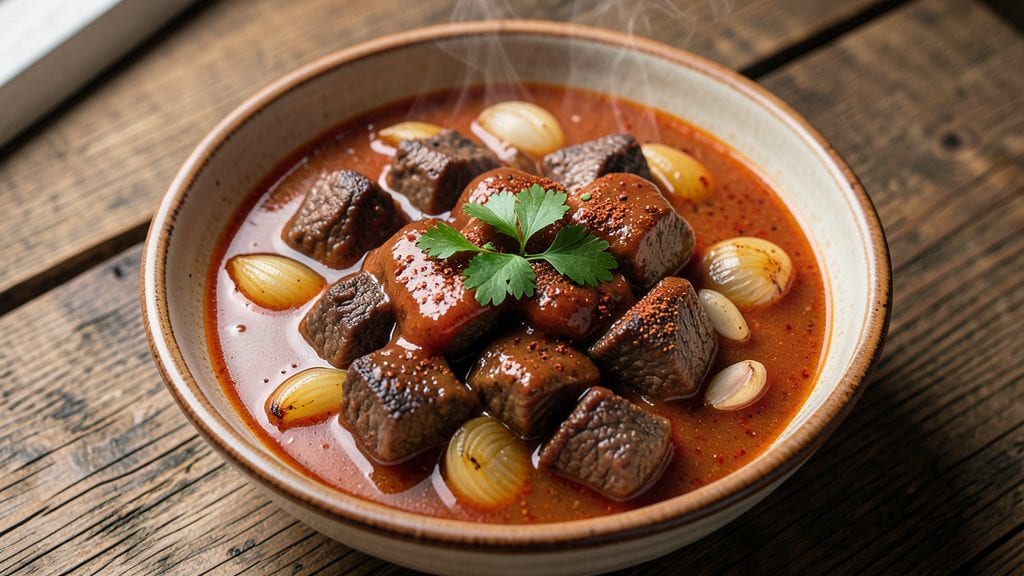
This traditional goulash soup recipe brings the rich, paprika-spiced warmth of Hungarian kitchens to your home, where tender beef and hearty vegetables simmer into a deeply flavorful broth.
The secret lies in slow-cooked meat that practically melts in your mouth, balanced by sweet and smoky paprika that gives this soup its signature depth. I’ve perfected this version over years of testing—every spoonful delivers that comforting, restaurant-quality experience without shortcuts.
The beauty of goulash lies in its simplicity and tradition: a few quality ingredients transformed through patience. You’ll start with browning beef for deep flavor, then build layers of aroma by toasting spices before adding tomatoes, onions, and potatoes.
The key is letting everything simmer long enough for flavors to meld—this isn’t a quick meal, but the kind that rewards you with warmth and satisfaction. No fancy techniques, just time and care.
What you’ll end up with is a steaming bowl of hearty comfort—tender beef, caramelized onions, and potatoes that soak up the rich broth. The paprika infuses every bite with a subtle, earthy sweetness that makes this soup unforgettable.
Serve it with crusty bread to soak up every last drop, or pair it with a simple green salad for balance. This is the kind of meal that feels like a hug on a cold day.
For those looking to adapt, a vegan version swaps beef for hearty mushrooms or lentils while keeping the same paprika-rich profile. The method remains the same—just let the flavors develop over time.
Whether you stick to tradition or make it your own, this goulash is a recipe worth returning to again and again.
Ingredients for traditional goulash soup
Sixteen ingredients. One deeply comforting bowl of tradition.
| Ingredient | Amount | Notes |
|---|---|---|
| Beef Chuck Roast 🥩 | 2 lb | Cut into 1-inch cubes, discard fat |
| Yellow Onions 🧅 | 2 whole | Medium size, sliced into half-moons |
| Garlic Cloves 🧄 | 6 cloves | Freshly minced, not pre-minced |
| Sweet Hungarian Paprika 🌶️ | 2 tbsp | Essential for authentic flavor |
| Smoked Paprika 🌶️ | 1 tbsp | Adds depth, not heat |
| Tomato Paste 🍅 | ½ cup | Squeeze tube or canned |
| Russet Potatoes 🥔 | 2 lb | Peeled, cut into 1-inch cubes |
| Carrots 🥕 | 4 whole | Medium size, sliced into rounds |
| Beef Broth 💧 | 4 cups | Low-sodium, homemade preferred |
| Red Wine 🍷 | 1 cup | Dry, bold red like Cabernet |
| Bay Leaves 🌿 | 2 whole | Fresh if possible, dried works |
| Fresh Thyme 🌿 | ½ cup | Leaves only, chopped |
| Salt 🧂 | 1 ½ tsp | Kosher or sea salt |
| Black Pepper 🌶️ | ½ tsp | Freshly cracked |
| Olive Oil 🫒 | 2 tbsp | For browning beef |
The beef is non-negotiable—chuck roast gives that melt-in-your-mouth texture. Costco or local butchers usually have it pre-cubed, but if you're buying a whole roast, ask for the chuck section. Look for good marbling—those little fat streaks mean flavor. The paprika? Sweet Hungarian is the gold standard (find it in the international aisle), but smoked adds that extra depth. I always grab a small jar of each—it's worth the splurge for this recipe. Skip the pre-minced garlic too; fresh takes 30 seconds and makes all the difference.
No red wine? Substitute beef broth with a splash of balsamic—it mimics the acidity. Fresh thyme is ideal, but dried at one-third the amount works in a pinch. The carrots can be baby carrots if that's what's in the fridge, and the potatoes? Russets or Yukon Golds both work—just peel and cube them. For the tomato paste, those squeeze tubes at Trader Joe's are perfect—they keep forever and you won't waste half a can. The broth? Homemade is best, but low-sodium store-bought saves time without sacrificing flavor.
This soup tastes even better the next day—reheats beautifully. Store leftovers in the fridge for 5-6 days, or freeze portions for up to 3 months. I always make a double batch because it disappears fast. The broth thickens as it cools, so add a splash of water when reheating. Serve with crusty bread to soak up every last drop—that's the point. The paprika-rich flavor actually improves over time, so don't rush it.
Why You'll Love This Recipe
- One-Pot Magic: I swear by this recipe because it’s literally one pot—no chopping boards, no extra pans. You brown the beef, toss in the onions and garlic, then dump in everything else. The paprika does all the work while you stir.
- Deep, Smoky Richness: That smoky paprika and sweet Hungarian paprika combo? It’s what turns this into a flavor bomb. The beef gets tender and infused with that earthy, slightly sweet heat—like a hug in a bowl.
- Leftovers That Don’t Suck: Between us, most soups get boring after day two. Not this one. The flavors actually deepened in my fridge—better the next day, honestly. I freeze half for lazy nights when I don’t want to cook.
- Budget Beef Bang: A chuck roast stretches forever in this soup—way cheaper than pre-cut steak, and it’s the star. I’ve fed six people for under $15, and no one complains (my picky teen included).
Step-by-step instructions for traditional goulash soup
This method delivers the rich, paprika-infused comfort you crave—layered flavors that simmer into perfect harmony.
Brown the Beef for Deep Flavor
Heat a large Dutch oven over medium-high heat until hot. Add the 2 tablespoons olive oil and swirl to coat the bottom evenly. Working in batches (you'll need to do this twice), add the 2 lb beef chuck roast cut into 1-inch cubes, discarding any visible fat. Let the beef brown undisturbed for 3-4 minutes until a deep crust forms.
This browning step is non-negotiable—it creates the Maillard reaction that builds the soup's complex, meaty foundation. You'll know it's ready when the beef releases easily from the pan. Transfer the browned beef to a plate and set aside. Don't drain the browned bits; they're packed with flavor that will form your sauce base.
Sauté Onions and Aromatics
In the same Dutch oven, add the 2 whole yellow onions sliced into half-moons and cook over medium heat for 5-6 minutes, stirring occasionally, until softened and beginning to caramelize. Add the 6 cloves minced garlic and cook for 30 seconds until fragrant—you should smell that sweet garlic aroma wafting through your kitchen.
Here's where the magic starts. The onions should be golden around the edges but not burned. If they stick, add a splash of red wine (about 2 tablespoons) to deglaze while you prepare the next ingredients. This step builds the aromatic base that carries the paprika flavors throughout the soup.
Build the Paprika Paste
Reduce heat to medium-low and stir in the 2 tablespoons sweet Hungarian paprika and 1 tablespoon smoked paprika. Let it cook for 1 minute until the raw paprika smell dissipates—this prevents bitterness in your finished soup. Add the ½ cup tomato paste and stir vigorously to combine completely with the onions.
This is the moment that matters: the paprika needs to bloom fully. If you notice any raw paprika flecks, cook for another 30 seconds. The mixture should transform from dry powder to a rich, aromatic paste. This step creates the signature deep red color and authentic goulash flavor that makes this soup so comforting.
Deglaze and Simmer the Base
Pour in the 1 cup red wine and scrape up all the browned bits from the bottom of the pot with a wooden spoon. Let it simmer for 3-4 minutes until reduced by half. Add the 4 cups beef broth, 2 whole bay leaves, ½ cup chopped fresh thyme, 1½ teaspoons salt, and ½ teaspoon black pepper. Bring to a gentle boil, then reduce heat to low and return the beef to the pot.
This is where patience pays off. Let the soup simmer uncovered for 1 hour, stirring occasionally. You're looking for the beef to become fork-tender and the flavors to meld together. The soup should reduce slightly, intensifying the flavors. If it gets too thick, add a splash of water or broth to maintain the right consistency.
Add Vegetables and Finish Cooking
Add the 2 lb russet potatoes cut into 1-inch cubes and 4 whole carrots sliced into rounds. Return the heat to medium-low and simmer uncovered for another 30-40 minutes, until the potatoes are fork-tender and the carrots are easily pierced with a fork. The vegetables should absorb the rich beef broth while maintaining their shape.
Taste and adjust seasoning if needed—you might need a bit more salt since the potatoes absorb some of the broth. Remove the bay leaves before serving. Ladle the goulash into bowls, making sure each serving gets a generous portion of tender beef and vegetables. The soup should be thick enough to coat the back of a spoon but still have a satisfying broth consistency.
Pro Tips For Making Traditional Goulash Soup
- SEAR THE MEAT FIRST: Don’t skip browning the beef chuck—this isn’t just for looks. A deep, caramelized crust locks in flavor and prevents the soup from tasting like boiled meat. Use a heavy pot and medium-high heat, resisting the urge to move the chunks too soon (they’ll release juices that steam instead of sear).
- BLOOM THE PAPRIKAS: Toast the paprikas in the pot for 30 seconds after the onions soften—this wakes up their aroma. My grandmother swore by this, and it’s the difference between a dusty, one-dimensional flavor and that rich, smoky depth you crave. Just don’t let them burn; keep the heat low once they start sizzling.
- SKIP THE PRE-COOKED ONIONS: I used to soften the onions first, but they turn mushy and lose their bite. Instead, cook them until they’re translucent but still hold shape—about 8 minutes—before adding the garlic. This keeps the texture bright and the base of the soup properly structured.
- SIMMER LOW AND LONG: Goulash isn’t a race. After adding broth, keep the heat at a bare simmer (tiny bubbles, not rolling) for at least 2 hours. The meat needs time to fall apart, and rushing it makes the soup taste thin and watery. Cover the pot and let it do its thing—your patience will pay off.
Pro cooking tips for great traditional goulash soup
Browning Beef Perfectly
Never skip browning the beef—this step unlocks the Maillard reaction, creating deep, meaty flavor. Use a Dutch oven on medium-high heat and let the beef sear undisturbed for 3-4 minutes per batch.
I like to work in batches to avoid overcrowding, which steams instead of browns. The goal is a deep crust that releases easily from the pan. 🔥
Paprika Bloom Matters
The secret to authentic flavor is letting the paprika bloom properly. Stir in both sweet and smoked paprika over medium-low heat and cook for 1 minute until the raw smell disappears.
This prevents bitterness and ensures a smooth, rich flavor. I always use Hungarian sweet paprika from Penzeys—it's the gold standard for goulash. 🌶️
Deglaze Like a Pro
After browning the beef, don't drain those flavorful browned bits! Use the red wine to deglaze the pot, scraping up every delicious bit with a wooden spoon.
This creates a rich, complex base for your soup. Let it reduce by half before adding the broth—this intensifies the flavors even more. 🍷
Simmer Time is Key
Patience is everything with goulash. After adding the broth and aromatics, let the soup simmer uncovered for at least 1 hour. This allows the beef to become fork-tender and the flavors to meld together.
I often simmer for 1.5 hours if I'm making it ahead—it only gets better with time. 🕒
Vegetable Timing
Add the potatoes and carrots in the final 30-40 minutes of cooking. This ensures they absorb the rich broth while staying firm enough to hold their shape. If you add them too early, they'll turn mushy.
I like to check for doneness by piercing with a fork—they should be tender but not falling apart. 🥔
Salt Adjustments
The potatoes absorb some of the broth, so you may need to add a bit more salt at the end. Taste as you go—it's better to adjust gradually than oversalt.
I usually add another ½ teaspoon before serving. Remember, the broth will thicken as it cools, so don't overdo it. 🧂
Nutrition facts
Frequently asked questions
Can I make goulash without red wine?
The wine adds depth, but you can substitute 1 cup beef broth plus 1 tablespoon balsamic vinegar for the same acidity. For extra richness, add 1 teaspoon soy sauce—it mimics the umami from wine. Just don't skip the deglazing step; those browned bits are flavor gold!
How do I know when the beef is tender enough?
Use the fork test: After 1 hour of simmering, pierce a beef chunk—it should feel like butter. If it's still tough, let it cook another 30 minutes uncovered. The longer it simmers, the more flavorful it becomes, but 1.5 hours total is ideal for perfect texture.
What if my goulash tastes too bitter?
Bitterness usually means raw paprika didn't bloom properly. Stir in 1 teaspoon sugar or ½ cup tomato juice to balance it, then simmer 5 minutes longer. For prevention, always cook paprika over medium-low heat for 1 full minute until the raw smell fades. A splash of lemon juice also helps brighten flavors.
Can I make this in an Instant Pot?
Yes! Brown the beef first in a skillet, then transfer everything to the Instant Pot. Cook on high pressure for 30 minutes, then quick-release. Add potatoes and carrots for the last 10 minutes of cooking. The pressure method cuts time but still delivers deep flavor—just don't skip the browning step!
What's the best way to reheat leftovers?
Reheat on the stove over low heat with 2-3 tablespoons water or broth to restore moisture. Never microwave—it makes the broth watery. For extra richness, add a pat of butter or a splash of cream when reheating. Leftovers actually taste better the next day!