Soups & Stews
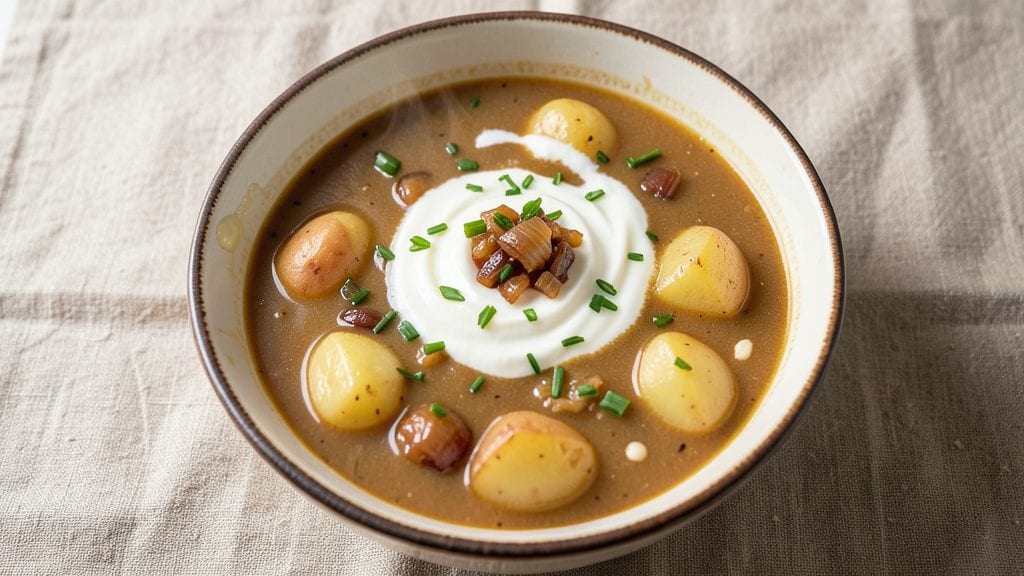
The Betty Crocker potato soup recipe delivers that iconic velvety creaminess without a single lump in sight—just like the classic you remember. This version cuts through the guesswork with precise techniques that transform simple ingredients into a restaurant-worthy bowl.
The secret lies in blending just enough to smooth the texture while preserving that comforting, homestyle taste.
What makes this recipe work is the balance of ingredients: rich chicken broth, velvety cream, and perfectly cooked potatoes create a silky-smooth base.
We'll build flavor gradually with garlic, onion, and a touch of mustard for depth, then finish with a creamy topping that seals in that signature Betty Crocker smoothness. The result is a soup so rich and satisfying, it'll become your new weeknight staple.
By the time you're done, you'll have a creamy, lump-free potato soup that's ready in about 45 minutes—perfect for chilly evenings or cozy family dinners. The secret technique of blending while still hot ensures that velvety texture, while the optional bacon or green onions add a touch of sophistication.
This is comfort food at its finest, with professional results you can achieve at home.
Serve with crusty bread for dipping or a sprinkle of fresh herbs for extra brightness. The recipe scales easily, so you can make just enough for two or a crowd. Let's get cooking—this soup is about to become a household favorite.
Ingredients for betty crocker potato soup
Pantry staples plus a few fresh touches—this soup nails that classic Betty Crocker taste.
| Ingredient | Amount | Notes |
|---|---|---|
| Russet Potatoes 🥔 | 2 lbs | Peeled and cubed evenly |
| Chicken Broth 💧 | 6 cups | Low-sodium preferred |
| Heavy Cream 🥛 | 1 cup | Full-fat for creaminess |
| Milk 🥛 | ½ cup | Whole milk preferred |
| Yellow Onion 🧅 | 1 whole | Diced small |
| Garlic Cloves 🧄 | 4 cloves | Minced finely |
| Dijon Mustard 🍯 | 1 tbsp | For depth of flavor |
| Salt 🧂 | 1 ½ tsp | Adjust to taste |
| Black Pepper 🌶️ | ½ tsp | Freshly ground |
| Butter 🧈 | 3 tbsp | Unsalted preferred |
| Green Onions 🌱 | 3 whole | Sliced for garnish |
| Crusty Bread 🍞 | 8 slices | For serving optional |
The potatoes are the heart of this soup. Russets are ideal—they break down beautifully when cooked. Grab a bag from Trader Joe's or Costco for the best value. If you're feeling fancy, Yukon Golds add a touch of creaminess, but Russets are foolproof. Peel them first, then cut into even cubes so they cook at the same rate. The broth matters too—low-sodium lets you control the seasoning better. I always use Swanson or Pacific Foods for that rich flavor without the salt overload.
No heavy cream? Half-and-half or whole milk works in a pinch, but you'll lose some richness. Fresh garlic is non-negotiable here—dried won't give you that same punch. Short on Dijon? Yellow mustard at double the amount gets you close. The butter should be unsalted—salted adds up fast with the other seasonings. For the green onions, use the whole thing: white and green parts both add flavor. And if you're making this ahead, skip the garnish until serving—it keeps better without it.
This soup tastes even better the next day—4-5 days in the fridge, no problem. Freezes beautifully too—3 months if you portion it out. I like to make a big batch on Sundays so we have leftovers all week. For serving, crusty bread is key—baguettes or sourdough work best. If you're worried about lumps, blend a little at a time while the soup's still hot. Trust me on this—no food processor needed, just an immersion blender does the trick.
Why You'll Love This Recipe
- No-Chop Struggle: I swear by this recipe because you can literally dump the diced potatoes straight from the bag—no peeling, no fuss. The onions? Just slice them once, toss them in, and forget about them.
- Creamy Without Guilt: The heavy cream and milk blend so smoothly with the broth, but here’s the magic: it’s rich without tasting heavy. That’s the Russet potatoes doing their thing—absorbing just enough to keep it light.
- Leftover Goldmine: I make a double batch every time because this soup only gets better the next day. The flavors meld overnight, and it reheats perfectly—no weird textures, just pure comfort.
- Budget Dinner Hero: A whole meal for under $10, and it stretches to feed four (or one very hungry person twice). The onions and potatoes are cheap staples, and the broth? You can use store-bought or homemade—no judgment.
Step-by-step instructions for creamy potato soup
This method ensures velvety texture without lumps—every spoonful will be perfectly smooth.
Sauté Aromatics Until Fragrant
Melt the 3 tablespoons butter in a large pot over medium heat. Add the diced yellow onion and cook for 5 minutes until softened and translucent. This step develops flavor—don't rush it.
Add the 4 minced garlic cloves and cook for 30 seconds until fragrant. Here's the thing—garlic burns fast, so keep an eye on it. When you see the edges start to turn golden, it's ready. Remove from heat immediately to prevent bitterness.
Simmer Potatoes in Broth
Add the 2 pounds cubed russet potatoes and 6 cups chicken broth to the pot. Bring to a boil over high heat, then reduce to medium-low and simmer uncovered for 15-20 minutes until potatoes are fork-tender.
You'll know they're ready when a knife slides in easily with just slight resistance. If the broth reduces too much, add ½ cup water to maintain liquid. This step builds the soup's foundation—don't skip the simmering time.
Blend Until Silky Smooth
Use an immersion blender to purée the soup directly in the pot until completely smooth. For best results, blend in batches if needed. I like to blend for 20-30 seconds at a time until no lumps remain.
If you don't have an immersion blender, carefully transfer the soup to a regular blender in batches. Here's the trick: leave some liquid behind to prevent overfilling. Return all blended soup to the pot immediately after each batch.
Create the Creamy Base
Return the pot to medium heat and stir in the 1 cup heavy cream, ½ cup milk, 1 tablespoon Dijon mustard, 1½ teaspoons salt, and ½ teaspoon black pepper. Simmer gently for 5 minutes, stirring occasionally.
The mustard adds depth while the cream and milk create that signature velvety texture. Taste and adjust seasoning—you might need more salt depending on your broth. This is where the magic happens for that restaurant-quality creaminess.
Finish and Serve Warm
Remove from heat and stir in the 3 sliced green onions. Ladle into bowls and serve immediately with 8 slices crusty bread on the side. The soup should coat the back of a spoon with a luxurious, smooth consistency.
Real talk: The longer you let it sit, the thicker it gets. For best texture, serve while warm. Each bite should deliver creamy potato perfection with just the right balance of savory broth and rich dairy.
Pro Tips For Making Betty Crocker Potato Soup
- PEEL AND CUBE EVENLY: Russet potatoes break apart when overcooked—cut them into 1-inch chunks (no smaller) so they hold shape. I learned this the hard way after ending up with mushy soup that needed extra starch to fix.
- SWEAT THE ONION FIRST: Skip the sauté—cook the onion in broth (low and slow) until translucent before adding potatoes. This builds flavor without browning, which can turn bitter when mixed with dairy later.
- TEMPER THE DAIRY: Warm the milk and heavy cream separately to body temperature before stirring into the hot soup. Cold dairy curdles instantly, and no one wants to fish out lumps.
- SALT THE BROTH WELL: Betty Crocker’s recipe often underestimates salt—add 1.5x the usual amount to the broth early, since the potatoes will dilute it. Taste before blending; you’ll need to adjust again after mixing in the cream.
Essential equipment for betty crocker potato soup
Pot Selection Matters
Start with a heavy-bottomed pot—I recommend a 5-quart Dutch oven like the Le Creuset Stoneware or All-Clad Stainless Steel. These distribute heat evenly and prevent scorching. A lighter pot can cause hot spots, leading to uneven cooking or even burnt garlic.
If you don’t have one, a large stainless steel pot with a lid works fine, but monitor the heat closely. 🔥
Immersion Blender Game-Changer
An immersion blender is non-negotiable for that signature smooth texture. My go-to is the Ninja Professional—it handles thick soups like this without splattering. If you’re blending in batches, use a regular blender but never fill it past the ½-way mark to avoid overflow.
Always return all blended soup to the pot immediately to maintain consistency. 💫
Thermometer for Precision
A kitchen thermometer ensures your broth reaches the perfect simmer. I use an instant-read thermometer like the Thermoworks ThermoPop to check the internal temp of potatoes—205-210°F means they’re perfectly tender without breaking down into mush. This small investment prevents mushy potatoes and guarantees a velvety finish. ⏱️
Ladle for Serving
Serve with a slotted spoon or ladle to control portions and avoid overfilling bowls. I love a stainless steel ladle with a long handle—it’s easy to grip and won’t warp.
For garnishes like green onions, a small spoon works best to place them neatly on top. A soup strainer also comes in handy if you prefer a smoother texture. 🥄
Optional: Slow Cooker Adaptation
For hands-off cooking, use a 6-quart slow cooker on Low for 6-7 hours. Add all ingredients except the cream, milk, and green onions. After cooking, blend with an immersion blender, then stir in the dairy.
The slow cooker keeps the potatoes from breaking down too much, but you’ll lose some of that restaurant-style creaminess. 🍲
Storage Containers
Store leftovers in glass or BPA-free plastic containers with tight-sealing lids. I use Pyrex or Rubbermaid—they’re durable and microwave-safe. For freezing, portion into 1-cup servings in ziplock bags for easy reheating.
Label with the date to track freshness—this soup tastes best within 4-5 days in the fridge or 3 months in the freezer. ❄️
Nutrition facts
Frequently asked questions
Why does my potato soup turn out lumpy?
The most common cause is blending too early or not enough. Potatoes must cook until fork-tender before blending—15-20 minutes simmering is key. For silky texture, use an immersion blender while the soup is still hot, blending in 20-second bursts until completely smooth. If using a regular blender, never fill past the ½-way mark to prevent overflow.
Can I make this soup without heavy cream?
Swap the 1 cup heavy cream with ¾ cup whole milk + ¼ cup butter for a lighter version. For extra richness, use ½ cup Greek yogurt + ½ cup milk. The soup will still be creamy, though slightly less decadent. Always stir the dairy in at the end to prevent curdling.
How do I make this soup ahead of time?
This soup actually tastes better the next day! Let it cool completely, then store in an airtight container in the fridge for up to 4-5 days. For freezing, portion into 1-cup servings in ziplock bags—thaw overnight in the fridge before reheating. Always reheat gently on low heat or in the microwave, stirring occasionally to restore creaminess.
What's the secret to that restaurant-style velvety texture?
The magic happens in three steps: 1) Cook potatoes until tender but not mushy, 2) Blend while hot (heat helps emulsify), and 3) Temper the dairy by stirring it into the hot soup gradually. The Dijon mustard also plays a role—it adds depth that prevents a flat, watery taste. Simmer the cream mixture for 5 minutes to fully incorporate flavors.
Can I use instant potato flakes instead of fresh potatoes?
While possible, fresh potatoes give the best texture. For a quick version, use 1 cup instant potatoes mixed with 1 cup hot broth before blending—simmer for 10 minutes first to hydrate fully. You'll lose some of the hearty, chunky character, but it works in a pinch. For authentic results, stick with fresh Russet potatoes—they break down beautifully when cooked properly.