
Soups & Stews
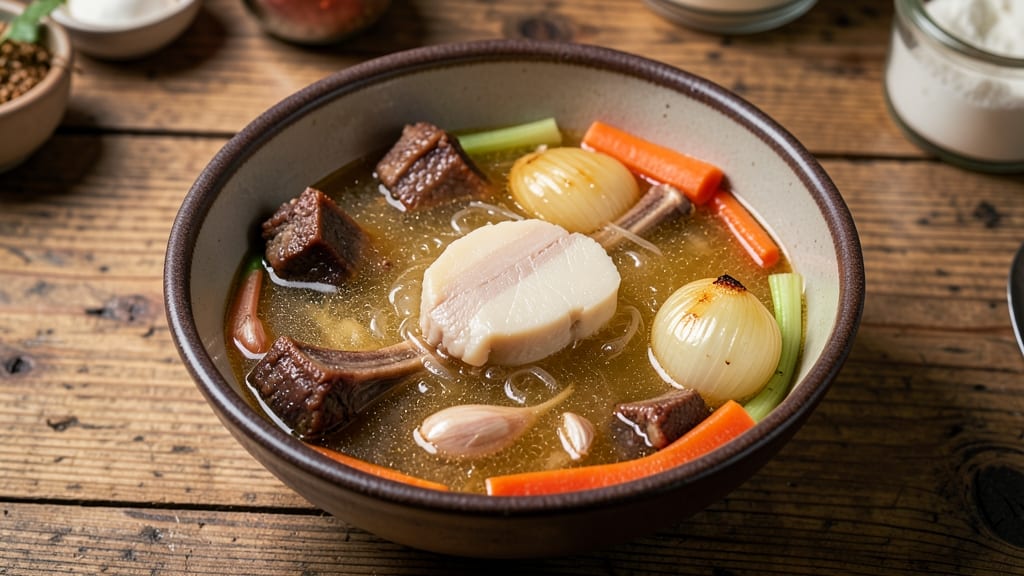
Creating bone marrow broth soup from scratch delivers a depth of umami flavor that store-bought versions simply can't match. The process starts with extracting rich, gelatinous marrow from beef bones, which forms the foundation of a soup that's velvety, deeply savory, and packed with nutrients.
This recipe transforms simple ingredients into a nourishing dish that feels both rustic and refined.
The key to success lies in slow simmering—allowing the marrow to infuse the broth over hours, creating a luxurious texture and concentrated flavor. You'll need just a few core ingredients: beef bones, marrow, vegetables, and aromatic herbs, all combined in a single pot.
The result is a soup that's hearty enough for winter meals yet light enough for any season.
By the time you're done, you'll have a bowl of soup with a glossy, golden surface and a broth so rich it coats your spoon. The marrow adds a luxurious mouthfeel, while the vegetables and herbs provide brightness and complexity.
This is comfort food at its finest—warm, satisfying, and full of depth.
Perfect for cold evenings or as a healing meal, this soup pairs beautifully with crusty bread or a simple green salad. The technique is straightforward, but the flavor reward is extraordinary. Let's get started on creating your own batch of this deeply flavorful soup.
Ingredients for bone marrow broth soup
Six pounds of beef bones and a cup of marrow create the velvety soul of this soup.
| Ingredient | Amount | Notes |
|---|---|---|
| Beef Bones 🦴 | 4 lb | Knuckle or marrow bones preferred |
| Fresh Bone Marrow 🥩 | 1 cup | Extracted from beef bones |
| Yellow Onion 🧅 | 1 whole | Chopped, medium size |
| Carrots | 4 medium | Peeled, chopped into chunks |
| Celery Stalks 🥬 | 4 whole | Chopped, with leaves |
| Garlic Cloves 🧄 | 6 cloves | Smashed, not minced |
| Fresh Parsley 🌿 | ½ cup | Chopped, stems included |
| Fresh Thyme 🌿 | 2 sprigs | Stems intact for infusion |
| Bay Leaves 🍃 | 2 whole | Dried, standard size |
| Black Peppercorns 🌶️ | 1 tbsp | Crushed, not ground |
| Sea Salt 🧂 | 1 ½ tsp | Diamond Crystal preferred |
| Apple Cider Vinegar 🍎 | 2 tbsp | For initial broth acidity |
| Cold Water 💧 | 12 cups | Filtered preferred |
The bones are everything here—knuckle or marrow bones from a butcher shop give you that rich, gelatinous goodness. Costco or Whole Foods usually carry them, but if you're buying from a regular grocery store, ask for the marrow-rich cuts. The marrow itself? Fresh is non-negotiable—store-bought versions just don't cut it. Look for bones with plump, white marrow inside. If you're extracting it yourself, use a spoon to scoop it out right before cooking. The onions, carrots, and celery are just there to play support—they'll mellow out as the marrow takes center stage.
No fresh marrow? High-quality beef gelatin (like Great Lakes) can mimic the texture, though it won’t taste identical. Swap the thyme for rosemary at half the amount if you prefer piney notes. The vinegar is key—it helps extract collagen early on, so don’t skip it. For the carrots, orange and white varieties both work, but stay away from purple—it can turn the broth funky. The celery leaves add subtle bitterness, but if you’re in a pinch, fresh dill works too. Just remember: the marrow is the star, so handle it with care.
This soup tastes even better the next day—3-4 days in the fridge, fully chilled. For longer storage, freeze in glass jars (leave 1-inch headspace) for up to 6 months. Reheat gently on the stove—never microwave, or you’ll break the emulsion. I like to portion it into bowls with a dollop of marrow on top and a sprinkle of fresh parsley. Crusty bread is mandatory—it soaks up the broth like a dream.
Why You'll Love This Recipe
- Pantry in 15 Minutes: I swear by this—just toss in the bones, marrow, and chopped veggies (no fancy prep needed) and let the pot do the work. Honestly, the hardest part is deciding when it’s ready.
- Rich Without Effort: That marrow melts into the broth like butter, turning every sip into something deeply savory. Between us, it’s the kind of flavor that makes you pause mid-bite—no fancy techniques required.
- Weeknight to Winter Feast: Same recipe works for a quick dinner or a potluck crowd. Double the batch, freeze half, and you’ve got a cozy meal ready in minutes when you least expect company.
- Budget-Boosting Magic: Beef bones and marrow stretch into gallons of broth—far cheaper than store-bought and packed with umami. I’ll be real: my grocery bill dropped after I started making this regularly.
Step-by-step instructions for bone marrow broth soup
This rich, umami-packed broth transforms simple ingredients into liquid gold through patience and technique.
Prepare the Bones and Marrow
Begin by separating the 4 lb beef bones from the 1 cup fresh bone marrow. Use a sharp cleaver to crack open the marrow bones—this releases the nutrient-rich marrow directly into the broth. Place the bones in a large stockpot, reserving the marrow for later.
Rinse the bones briefly under cold water to remove any surface debris, but don't soak them—this washes away flavorful minerals. For the marrow, scoop it directly into a small bowl and set aside. The marrow will melt into the broth later, creating that signature velvety richness.
Build the Aromatic Base
In the same stockpot, add the chopped 1 whole yellow onion, 4 medium carrots, 4 whole celery stalks, 6 smashed garlic cloves, 2 sprigs fresh thyme, and 2 whole bay leaves. These vegetables form the flavor foundation—don't skip the celery leaves, as they add subtle bitterness that balances sweetness.
Pour in the 2 tbsp apple cider vinegar and 12 cups cold water. The vinegar helps extract collagen from the bones during the initial simmer. Bring everything to a boil over medium-high heat, then immediately reduce to a gentle simmer. Watch carefully—the water should bubble softly, not roll vigorously.
Simmer and Extract Collagen
Cover the pot and maintain a barely simmering temperature for 3 hours. This low-and-slow approach breaks down collagen into gelatin, which gives the broth its signature body. Skim any foam or impurities that rise to the surface with a fine-mesh skimmer—this ensures clarity.
After 3 hours, remove the pot from heat and let it sit for 15 minutes. This resting period allows suspended particles to settle. Then, carefully strain the broth through a fine-mesh sieve lined with cheesecloth into a clean pot. Discard the solids—you've extracted all the flavor you need.
Incorporate Marrow and Season
Return the strained broth to the pot and place it over low heat. Add the reserved 1 cup fresh bone marrow, stirring gently until it melts completely into the broth. This step happens off the boil—heat should be just enough to warm the marrow without cooking it aggressively.
Stir in the 1 tbsp crushed black peppercorns and 1.5 tsp sea salt, tasting as you go. The broth should be deeply savory with a subtle sweetness from the vegetables. If it tastes flat, add a pinch more salt—remember, you can always adjust later, but you can't remove excess salt.
Finish with Fresh Herbs
Remove the pot from heat and stir in the 0.5 cup chopped fresh parsley. The parsley adds brightness and freshness that cuts through the richness of the marrow. Let the broth sit for 10 minutes before serving—this allows the flavors to meld completely.
Serve the broth warm, ideally in shallow bowls to highlight its golden hue. The perfect bowl should have a velvety mouthfeel, deep umami flavor, and just a hint of herbal brightness. For extra richness, top each serving with a dollop of the melted marrow from the surface.
Pro Tips For Making Bone Marrow Broth Soup
- Char Bones First: Toss those beef bones in a 450°F oven for 20 minutes before simmering—crispy blackened bones release deeper flavor into the broth. I used to skip this, and the soup always tasted like it was missing something.
- Scrape, Don’t Skip: Fresh bone marrow isn’t just for scooping—scrape the insides of the bones with a spoon and toss them into the pot. That gelatinous stuff is pure umami gold, and wasting it is like leaving money on the table.
- Don’t Crowd the Pot: Start the broth with a tight fit of bones and veggies, but if the liquid drops below the bones by mid-cook, skim off some foam and add hot water. Overcrowding turns broth into murky soup, and no one wants that.
- Save the Strain: Instead of straining the soup through a fine mesh, let it settle for 10 minutes, then ladle off the clear top layer. The sediment has flavor, but you can always save it for another batch—no need to fight with a colander.
Regional styles of this dish
French Bouillon Tradition
The French elevate bone marrow broth into a refined bouillon by adding a splash of dry white wine—about ½ cup—during the simmer. I prefer Sauvignon Blanc for its crisp acidity that cuts through the richness.
The French also use parsley stems instead of just leaves, which adds a deeper herbal complexity. Serve with crusty baguette and a sprinkle of fresh tarragon for an authentic bistro touch. 🍷
Italian Osso Buco Style
In Italy, this soup transforms into a secondi (main course) by adding braised shank slices after the broth is complete. Simmer 1 lb beef shank in the broth for 1.5 hours until fork-tender, then shred the meat and return it to the pot.
Finish with ½ cup heavy cream and grated Parmigiano-Reggiano for a creamy, hearty version. The Italians also love topping it with crispy capers for a briny contrast. 🍝
Spanish Cocido Adaptation
Spain's cocido tradition incorporates chickpeas and smoked paprika into the broth. After the initial 3-hour simmer, add 1 cup cooked chickpeas and 1 tsp smoked paprika, simmering for another 20 minutes.
The Spanish also use morcilla (blood sausage) as a topping, adding a deep, iron-rich flavor. Serve with tortilla española for a complete meal. 🇪🇸
Japanese Niku Jiru Twist
For a Japanese-inspired take, replace the thyme with shiso leaves and add 1 tbsp soy sauce during the final seasoning. The Japanese also use soft tofu cubes as a garnish, which soak up the broth beautifully.
Serve in lactose-free miso bowls for an umami-packed presentation. The contrast of textures—creamy marrow, silky tofu, and tender vegetables—makes this a standout dish. 🍜
American South Comfort
The Southern U.S. version often includes collard greens and smoked ham hocks in the broth. After the initial simmer, add 1 lb ham hocks and 4 cups chopped collards, simmering for 1 more hour.
Finish with hot sauce and crumbled cornbread on top. This hearty, smoky adaptation is perfect for chilly evenings. 🌶️
Modern Fusion Approach
For a contemporary twist, blend ½ cup of the finished broth with 1 tbsp miso paste and 1 tsp sesame oil, then swirl it back in before serving.
Top with crispy shallots and microgreens for a restaurant-worthy presentation. This fusion balances traditional richness with modern techniques—ideal for impressing guests. ✨
Nutrition facts
Frequently asked questions
Why does bone marrow broth taste different from regular beef broth?
The marrow adds a luxurious, buttery richness that regular beef broth can't match. It contains concentrated fat and collagen that create a velvety texture and deep umami flavor. The slow simmering process also extracts more gelatin, giving it that signature glossy finish.
Can I use beef gelatin instead of fresh bone marrow?
Yes, but the texture and flavor won't be identical. Use 1 tablespoon of high-quality beef gelatin per cup of broth to mimic the richness. For best results, dissolve it in cold water first, then stir into the warm broth. Fresh marrow still delivers superior depth of flavor and mouthfeel.
How long can I store this broth in the refrigerator?
This broth stays fresh for 3-4 days in the refrigerator when fully chilled. For longer storage, freeze in glass jars (leave 1-inch headspace) for up to 6 months. Always thaw overnight in the fridge—never at room temperature—to preserve texture.
What if my broth turns cloudy during simmering?
Cloudiness usually means you need to skim more foam or simmer longer. If it's already strained and cloudy, try straining again through a cheesecloth-lined sieve or adding 1 extra bay leaf and simmering 15 more minutes. For a crystal-clear result, use cold water for the final rinse of strained broth.
Can I make this soup vegetarian?
Not traditionally, but you can create a similar umami-rich broth using mushroom stems, seaweed, and vegetable-based gelatin. For texture, blend cashew cream into the finished broth. The flavor won't be identical, but it achieves a comparable velvety mouthfeel.