
Soups & Stews
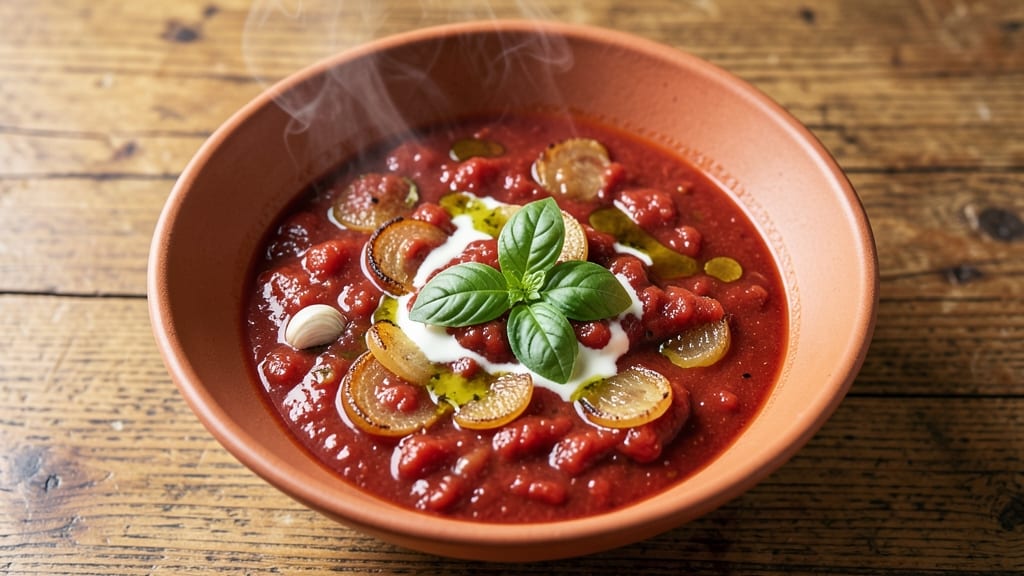
This Natasha's Kitchen tomato soup recipe delivers the comforting depth of slow-simmered tomatoes, bright garlic, and fragrant basil—exactly the kind of velvety soup that transforms chilly evenings into cozy memories.
The secret lies in caramelizing onions until they're golden and sweet, then building layers of flavor by simmering crushed tomatoes with aromatic herbs until the sauce reduces to a luscious, almost sauce-like consistency.
What makes this recipe stand out is the balance of richness and freshness: a touch of cream at the end creates a luxurious texture without overpowering the bright tomato and garlic flavors.
I developed this version after years of testing—slow simmering is key to developing that restaurant-quality depth, while fresh basil added at the finish keeps the soup vibrant and alive. Every spoonful delivers that perfect harmony of sweet, savory, and herbal notes.
The result is a soup so smooth and flavorful it feels like a hug in a bowl—creamy yet bright, with just enough acidity to keep your taste buds engaged.
The aroma alone will have everyone gathering in the kitchen, and the first bite delivers on that promise of comfort food done right. This is the kind of soup that pairs beautifully with crusty bread or grilled cheese, making it perfect for weeknight dinners or special gatherings.
Ready in about 45 minutes with minimal prep, this recipe proves you don't need complicated techniques to create something extraordinary. The ingredients are simple—just high-quality tomatoes, fresh herbs, and a few pantry staples—but the result is anything but basic.
Let's get cooking and bring that Natasha's Kitchen warmth to your table.
Ingredients for natasha's kitchen tomato soup
Simple ingredients transform into restaurant-quality tomato soup with velvety texture and bright herbal notes.
| Ingredient | Amount | Notes |
|---|---|---|
| Extra-Virgin Olive Oil 🫒 | 2 tbsp | High-quality, fruity variety |
| Yellow Onion 🧅 | 1 whole | Medium size, thinly sliced |
| Garlic Cloves 🧄 | 4 cloves | Freshly peeled, minced |
| Canned San Marzano Tomatoes 🍅 | 28 oz | Crushed by hand or blender |
| Vegetable Broth 💧 | 2 cups | Low-sodium preferred |
| Fresh Basil Leaves 🌿 | ½ cup | Packed, stems removed |
| Heavy Cream 🥛 | ¼ cup | Full-fat for richness |
| Granulated Sugar 🍚 | 1 tsp | Balances acidity |
| Diamond Crystal Kosher Salt 🧂 | 1 tsp | Adjust to taste |
| Freshly Ground Black Pepper 🌶️ | ½ tsp | Freshly cracked preferred |
| Red Wine Vinegar 🍷 | 1 tbsp | For brightness |
| Crusty Bread 🍞 | 4 slices | For serving, optional |
| Parmesan Cheese 🧀 | ¼ cup | Freshly grated, for garnish |
The tomatoes are the foundation—San Marzano delivers the sweetest, most concentrated flavor, but any high-quality crushed tomatoes work. I always buy a few extra cans to keep on hand since they're the backbone of this soup. For the onions, patience is key: caramelizing them until deep golden and sweet takes about 15 minutes—don't rush. The fresh basil should be vibrant green with no signs of wilting, as it adds that signature herbal brightness. Whole Foods or local markets often carry the freshest herbs, but grocery store basil works in a pinch if it's bright and firm.
No San Marzano tomatoes? Any good-quality crushed tomatoes will work—just taste and adjust the sugar slightly. Substituting heavy cream with half-and-half or coconut milk keeps it dairy-free but slightly lighter. For a vegetarian twist, swap vegetable broth for mushroom broth—it adds an extra layer of umami. The red wine vinegar can be omitted if you prefer no acidity, but it's what gives this soup that restaurant-quality finish. If you're using dried basil, reduce to one-third the amount—fresh is always better, but dried works in a bind.
This soup tastes even better the next day as flavors meld. Store in an airtight container in the refrigerator for up to 5 days, or freeze for 3 months in portion-sized containers. For serving, I always toast the crusty bread with a little garlic butter—sourdough or baguette slices work perfectly. The Parmesan should be freshly grated from a block; pre-grated tends to clump and lacks that fresh, nutty flavor. Make a double batch and freeze half for those lazy weeknights when you crave comfort.
Why You'll Love This Recipe
- No Chopping Needed: I swear by this—just dice one onion and mince a few garlic cloves. The San Marzano tomatoes do all the heavy lifting while you sip your coffee.
- Garlic Bomb Depth: That slow-simmered garlic in extra-virgin olive oil? It builds layers of flavor you won’t find in jarred soup. Rich, toasty, and just shy of overpowering.
- Meal Prep MVP: Doubles easily, reheats beautifully, and keeps for days in the fridge. Perfect for lazy Sundays or when you need to feed the whole family without stress.
- Budget-Friendly Luxury: San Marzano tomatoes and good olive oil feel indulgent, but the broth stretches this into multiple servings. Fancy ingredients, zero guilt.
Step-by-step instructions for natasha's kitchen tomato soup recipe
This velvety tomato soup delivers restaurant-quality depth with a perfect balance of garlic, basil, and creamy richness.
Sauté Aromatics Until Fragrant
Heat the 2 tablespoons extra-virgin olive oil in a large pot over medium heat. Add the 1 whole yellow onion, sliced into thin half-moons, and cook for 5 minutes until softened and translucent. The onions should yield their moisture and begin to caramelize slightly at the edges.
Add the 4 cloves minced garlic and cook for another 30 seconds until fragrant—you'll notice the aroma intensify dramatically. This foundational step builds the soup's flavor profile. Be careful not to let the garlic brown, as it can become bitter. Once the garlic releases its aroma, you're ready for the next ingredient.
Build the Tomato Base
Pour in the 28 ounces canned San Marzano tomatoes and stir to combine with the aromatics. Add the 2 cups vegetable broth, 1 teaspoon granulated sugar, 1 teaspoon diamond crystal kosher salt, and 0.5 teaspoon freshly ground black pepper. Bring the mixture to a gentle boil over medium-high heat, then immediately reduce to a simmer.
Let the soup simmer uncovered for 20 minutes, stirring occasionally. This allows the flavors to meld and the acidity to mellow. The texture should begin to thicken slightly as the tomatoes break down. If the soup reduces too much, add 1-2 tablespoons water to maintain consistency. The sugar balances the acidity while the salt and pepper enhance the natural sweetness of the tomatoes.
Blend to Silky Smoothness
Remove the pot from heat and let the soup cool slightly for 5 minutes. Using an immersion blender, carefully blend the soup until completely smooth. Work in batches if needed, ensuring no chunks remain. For a perfectly velvety texture, strain the soup through a fine-mesh sieve if desired, though this step is optional.
Return the soup to the pot and stir in the 0.5 cup packed fresh basil leaves. Simmer gently for 5 minutes to infuse the basil's aroma. The basil should wilt completely, releasing its bright, herbal notes. This is where the soup transforms from good to exceptional—don't skip this infusion step.
Finish with Cream and Acid
Reduce the heat to low and stir in the 0.25 cup heavy cream and 1 tablespoon red wine vinegar. The cream adds luxurious richness while the vinegar brightens the soup's acidity. Simmer for 3-4 minutes until the cream is fully incorporated and the soup reaches a temperature of 180°F. Taste and adjust seasoning if needed—this is your final opportunity to balance the flavors.
The soup should now be velvety, aromatic, and perfectly balanced. If you prefer a lighter texture, you can reduce the cream to 0.125 cup or omit it entirely. The vinegar is crucial here—it cuts through the richness and enhances the tomato's natural sweetness.
Serve with Crusty Bread and Garnish
Ladle the soup into bowls and garnish each serving with 1 tablespoon freshly grated parmesan cheese. The parmesan adds a salty, umami depth that complements the creamy tomato base. Serve immediately with the 4 slices crusty bread on the side for dipping.
This soup tastes best fresh, but it can be reheated gently on the stove over low heat for 5-10 minutes, stirring occasionally. If the soup thickens upon reheating, thin it with vegetable broth as needed. The contrast of the warm, velvety soup with the crisp, crusty bread makes this dish truly unforgettable.
Pro Tips For Making Natasha'S Kitchen Tomato Soup
- Sear the Onion Slow: I learned this the hard way—rushing the onions means they’ll turn bitter before the garlic even hits. Let them cook on medium-low for 8–10 minutes until deeply golden and jammy, stirring occasionally. The longer they sit, the sweeter the base.
- Crush Garlic Coarsely: Minced garlic burns fast and turns bitter. For this soup, smash the cloves with the flat of your knife first, then finely chop—just big enough to dissolve but not disappear. You’ll taste the difference when the broth simmers.
- Don’t Dump Cold Broth: Adding ice-cold vegetable broth to hot tomatoes shocks the flavors and dulls the acidity. Warm the broth slightly (just until steaming) before mixing it in—it blends smoother and keeps the soup’s brightness intact.
- Blend in Batches: If you’re using a countertop blender, split the soup into two batches. Overfilling it risks a messy explosion, and the motor struggles to puree thick tomato pulp evenly. Less stress, smoother results—trust me.
Best sauces and condiments for these flavors
Creamy Upgrade
This soup shines with its velvety texture, but you can take it to the next level by swapping the heavy cream for crème fraîche or mascarpone cheese—both add tangy richness without curdling. I like 1/4 cup crème fraîche for a lighter, more complex finish.
For a dairy-free option, blend 1/4 cup cashew cream (soaked cashews + water) until smooth, then stir it in at the end. The key is to temper the cream first by mixing it with a splash of hot soup before adding it all at once. 🥛
Herb Variations
Fresh basil is classic, but don't be afraid to experiment! Swap in thyme for an earthy depth or oregano for a Mediterranean twist.
For a spicy kick, add 1/2 teaspoon red pepper flakes with the garlic or stir in 1 tablespoon chopped cilantro at the end for a bright, zesty finish.
I once made a version with fresh rosemary—it pairs surprisingly well with the tomatoes and adds a piney aroma that's unexpected but delicious. 🌿
Acidity Balance
The red wine vinegar is what elevates this soup from ordinary to extraordinary, but you can adjust it to taste. For extra brightness, try 1 tablespoon lemon juice or 1 teaspoon balsamic vinegar instead.
If you prefer a sweeter profile, reduce the vinegar to 1/2 tablespoon and add 1/2 teaspoon honey or maple syrup to balance the flavors. The goal is to cut through the creaminess without overpowering the tomatoes. 🍋
Cheesy Garnishes
While Parmesan is the star garnish, consider these alternatives: Pecorino Romano for a sharper bite, feta crumbles for a tangy contrast, or ricotta dollops for a creamy finish. For a vegetarian twist, top with nutritional yeast—it adds a cheesy, umami flavor without dairy.
I also love sprinkling toasted pine nuts or pumpkin seeds for crunch and extra nutrition. 🧀
Spicy Kick
Add heat with 1/2 teaspoon cayenne pepper or 1 teaspoon hot sauce (like Cholula or Tabasco). For a smoky depth, stir in 1/2 teaspoon smoked paprika with the garlic.
If you love spicy food, try 1/4 teaspoon Aleppo pepper—it adds a mild, fruity heat that complements the tomatoes beautifully. Always taste as you go to avoid overpowering the dish. 🌶️
Umami Boosters
For an extra layer of savory depth, stir in 1 teaspoon soy sauce or 1/2 teaspoon miso paste at the end. A splash of tomato paste (1/2 tablespoon) while sautéing the onions adds concentrated flavor.
I also love adding 1/4 cup finely chopped mushrooms (cremini or shiitake) when sautéing the onions—they absorb the garlic flavor and add a meaty texture. 🍄
Nutrition facts
Frequently asked questions
Can I make this tomato soup without fresh basil?
If you don't have fresh basil, use 1 teaspoon dried basil instead, but reduce the simmering time to 2 minutes to avoid overpowering the flavor. For extra depth, add 1/2 teaspoon dried oregano or a pinch of red pepper flakes to compensate for the missing herbal notes.
How do I adjust the creaminess if I prefer a lighter soup?
For a lighter texture, reduce the heavy cream to 2 tablespoons or swap it for 1/4 cup coconut milk or cashew cream. If you omit the cream entirely, stir in 1 tablespoon olive oil at the end to maintain richness. The soup will still be flavorful but with a brighter, tomato-forward taste.
Can I use canned tomatoes instead of San Marzano?
Yes, but choose a high-quality crushed tomato brand like Muir Glen or Century. Since canned tomatoes vary in acidity, taste before adding the 1 teaspoon sugar—you may need to adjust it slightly. For extra depth, add 1/2 teaspoon tomato paste when sautéing the onions. The flavor will be slightly different but still delicious.
Why does my soup taste too acidic?
If your soup tastes too tangy, balance it with 1/2 teaspoon honey, maple syrup, or an extra pinch of sugar. The red wine vinegar is key for brightness, but you can reduce it to 1/2 tablespoon or swap it for lemon juice if needed. Always taste as you go—this is the best way to adjust seasoning.
How long can I store leftovers, and how do I reheat?
Store leftovers in an airtight container in the fridge for up to 5 days or freeze for 3 months. To reheat, warm over low heat on the stove for 5-10 minutes, stirring occasionally. If the soup thickens, thin it with 1-2 tablespoons broth or water. The flavors actually improve after resting!