Soups & Stews
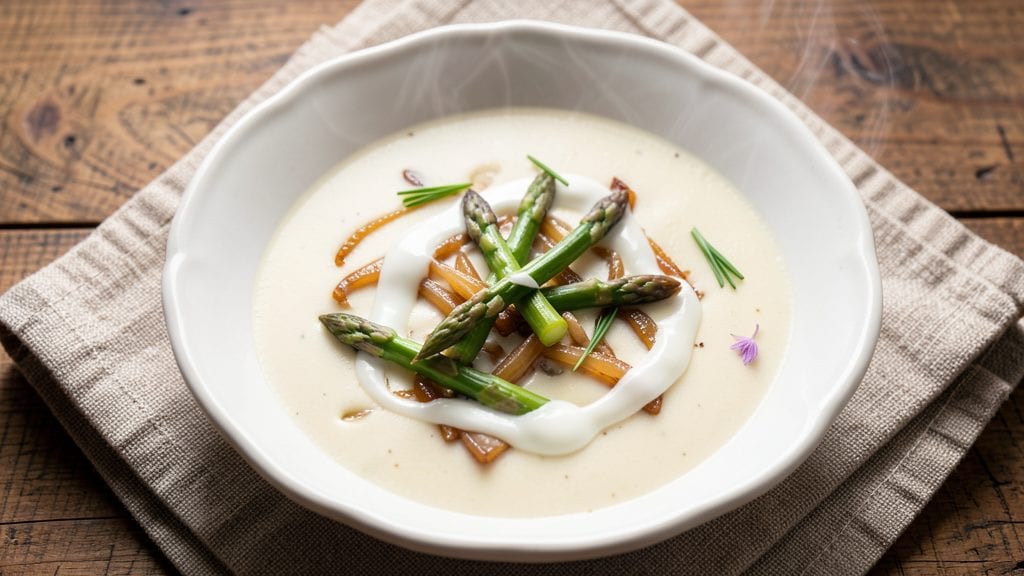
This Barefoot Contessa cream of asparagus soup recipe delivers that restaurant-quality velvety texture you crave, with a fresh herb finish that elevates it beyond basic comfort food. This recipe captures the essence of Ina Garten’s approachable yet refined style—where simple ingredients transform into something truly special.
The secret lies in proper technique: sautéing aromatics until fragrant, simmering the broth just enough to develop depth, and finishing with bright herbs that cut through the richness.
What makes this soup stand out is its balance of silky smoothness and vibrant flavor. You’ll start with fresh asparagus, which adds natural sweetness and a subtle earthiness that forms the base of the soup.
The key steps—like reducing the broth to concentrate the flavors and whisking in cream at the right temperature—ensure a velvety consistency without breaking. The result is a soup that’s creamy yet light, rich yet refreshing, and perfect for spring or summer gatherings.
By the time you’re done, you’ll have a bowl of soup that’s golden, aromatic, and finished with fresh herbs that add a pop of color and brightness. The texture is impossibly smooth, with just enough body to feel satisfying, while the herbs provide a fresh contrast.
This is the kind of soup that makes you want to linger at the table, savoring each spoonful. Ready to make it? Here’s everything you need.
One of the best parts about this recipe is its versatility. Serve it as a starter for a spring dinner or as a light lunch on a warm day. You can also customize it with optional garnishes like crispy croutons, a drizzle of cream, or a sprinkle of grated parmesan.
The method is straightforward, but the results are anything but basic—this is comfort food with a touch of elegance.
Ingredients for barefoot contessa cream of asparagus soup
Simple ingredients transform into velvety, herb-finished soup with restaurant-quality texture.
| Ingredient | Amount | Notes |
|---|---|---|
| Fresh Asparagus 🌱 | 1 lb | Trimmed ends, tough woody parts removed |
| Yellow Onion 🧅 | 1 whole | Medium size, diced finely |
| Garlic Cloves 🧄 | 3 cloves | Peeled, minced finely |
| Extra-Virgin Olive Oil 🫒 | ½ cup | High quality, fruity |
| Vegetable or Chicken Broth 💧 | 4 cups | Low-sodium preferred |
| Heavy Cream 🥛 | 1 cup | Full-fat for best texture |
| Fresh Chives 🌿 | ¼ cup | Chopped finely, for garnish |
| Fresh Tarragon 🌿 | ¼ cup | Chopped finely, optional but recommended |
| Fresh Dill 🌿 | 0.15 cup | Chopped finely, for brightness |
| Salt 🧂 | 1 tsp | Kosher or sea salt |
| Ground Black Pepper 🌶️ | ½ tsp | Freshly ground preferred |
| White Wine 🍷 | ½ cup | Dry, like Sauvignon Blanc |
| Lemon Juice 🍋 | 1 tbsp | Freshly squeezed |
The asparagus is the soul of this soup—fresh, in-season spears make all the difference. Look for vibrant green stalks with tightly closed tips at your local farmers market or grocery store’s produce section. Costco or Whole Foods often carry high-quality asparagus bundles. Trim the tough ends carefully (about 1 inch from the base) and discard—they’re inedible. For extra depth, save a few stalks to blend into the finished soup for a silky texture. The herbs—chives, tarragon, and dill—should be bright and fragrant. If using dried, reduce to one-third the amount, but fresh is ideal for that signature Barefoot Contessa brightness.
No white wine? Substitute extra broth or apple cider vinegar—just add a pinch more salt to balance. Short on fresh herbs? Dried works in a pinch (tarragon is the only one that’s tricky—substitute with a mix of thyme and basil). For the broth, low-sodium is key—you don’t want to over-salt later. If using chicken broth, opt for organic or high-quality brands like Pacific Foods or Swanson for better flavor. The heavy cream should be full-fat—this isn’t the time for skim. If you’re avoiding dairy, coconut milk works but alters the texture slightly. For the olive oil, California extra-virgin brands like Corto or Lucini add a fruity note that complements the asparagus perfectly.
This soup reheats beautifully—gentle warmth on the stove is best to avoid breaking the cream. Store in an airtight container for up to 3 days in the fridge or 3 months frozen. For freezing, let it cool completely first. The herbs can be added fresh after reheating for maximum brightness. To prep ahead, chop all aromatics and store in the fridge until ready to sauté. The asparagus can be prepped and refrigerated for 1 day before cooking—just cover tightly with a damp towel to keep crisp.
Why You'll Love This Recipe
- No-Fuss Prep: I swear by this recipe because it’s the kind of soup where you can chop asparagus while the broth heats—no fancy techniques, just a knife and a pot. The onions and garlic caramelize right in the olive oil, so you’re not stuck with a separate pan.
- Rich Without the Guilt: That creamy texture comes from blending the asparagus itself, not heavy cream—so it’s lighter than you’d think. The olive oil adds depth, and the broth (chicken or veg) makes it feel indulgent without breaking the bank.
- Weeknight to Dinner Party: Honestly, this is my go-to when I need something quick but still impressive. Serve it with crusty bread for a lazy night, or drizzle with a little cream and top with toasted almonds for a fancier meal. It works both ways.
- Leftovers That Don’t Suck: Unlike some soups, this one actually tastes better the next day—thicker, warmer, and just as good. I make a big batch, freeze half, and pull it out for those days when I’m too tired to cook. (Yes, even on a Tuesday night.)
Step-by-step instructions for cream of asparagus soup
This method delivers velvety smooth asparagus soup with bright herb notes and perfect balance.
Sauté the Aromatics Until Fragrant
Heat the 0.5 cup extra-virgin olive oil in a large pot over medium heat. Add the 1 whole yellow onion and cook for 5-6 minutes until softened and translucent. The onion should release its sweetness as it cooks.
Add the 3 cloves minced garlic and continue cooking for 30 seconds until the garlic is fragrant but not browned. This step builds the flavor foundation - don't rush it. The garlic should smell pungent and inviting when done right.
Cook the Asparagus and Deglaze
Add the trimmed 1 lb fresh asparagus (cut into 1-inch pieces) to the pot and sauté for 5 minutes until the asparagus begins to soften slightly. Stir occasionally to ensure even cooking.
Pour in the 0.5 cup white wine and scrape up any browned bits from the bottom of the pot. Let the wine simmer for 2-3 minutes until mostly evaporated. This deglazing step captures all the flavorful fond that would otherwise burn.
Simmer with Broth and Season
Add the 4 cups vegetable or chicken broth and bring to a gentle boil. Reduce heat to medium-low and simmer for 15-20 minutes until the asparagus is completely tender and the soup has reduced slightly.
Season with the 1 tsp salt and 0.5 tsp ground black pepper. Taste and adjust seasoning if needed - the soup should be well-seasoned but not salty. This is where you ensure all the flavors come together harmoniously.
Blend for Silky Smooth Texture
Using an immersion blender, carefully blend the soup directly in the pot until completely smooth. If you prefer to use a countertop blender, work in batches and return each blended portion to the pot. The soup should have a velvety, creamy consistency.
Return the pot to medium-low heat and stir in the 1 cup heavy cream. Simmer gently for 5 minutes to heat through. The cream will blend seamlessly with the asparagus flavor, creating that signature creamy texture.
Finish with Fresh Herbs and Lemon
Remove the pot from heat and stir in the 0.25 cup chopped fresh chives, 0.25 cup chopped fresh tarragon, and 0.15 cup chopped fresh dill. Add the 1 tbsp lemon juice and give the soup one final stir.
Taste and adjust seasoning if needed. The fresh herbs should brighten the soup while the lemon adds a subtle acidity that balances the richness. Ladle into bowls and serve immediately while hot, garnished with additional fresh herbs if desired.
Pro Tips For Making Barefoot Contessa Cream Of Asparagus Soup
- CHAR THE ASPARAGUS FIRST: You’d be surprised how much better the flavor is if you blanch the asparagus for 2 minutes in boiling salted water before chopping it. This softens the tough ends and concentrates the sweetness—skip this, and you’ll taste raw, bitter asparagus in every spoonful.
- SWEAT THE ONIONS LOW AND SLOW: I used to rush this step, but the Contessa’s recipe expects patience. Cook the onions in olive oil on low heat until they’re deep golden and translucent, not browned—about 10-12 minutes. That’s when they’ll melt into the soup without adding bitterness.
- RESIST THE URGE TO OVERBLEND: The soup’s texture should be velvety, not gluey. Pulse the asparagus, broth, and cream in batches until smooth, then stop. Overblending turns it into a paste—give it one final quick swirl with a whisk if needed, but don’t let the immersion blender run wild.
- USE COLD BROTH FOR CREAMY PERFECTION: Add the cold broth to the hot asparagus purée in a slow, steady stream while blending. This trick prevents the cream from curdling and keeps the soup silky—hot broth dumped in all at once is a one-way ticket to lumpy soup.
Common mistakes when making this recipe
Overcooking Asparagus
Asparagus loses its delicate sweetness and vibrant green color when overcooked. The moment it turns mushy and loses its bright hue, it’s past its prime. I’ve learned to watch the clock closely—5 minutes maximum of sautéing before adding broth.
If you’re using an immersion blender, ensure the asparagus is tender but still holds its shape before blending. Overcooking also releases bitter compounds, which can ruin the soup’s velvety texture. 🌱
Skipping the Deglaze
That browned fond at the bottom of your pot is pure flavor gold. When you pour in the 0.5 cup white wine and scrape up those caramelized bits, you’re capturing layers of depth that would otherwise burn.
I’ve made this mistake—skipping the deglaze results in a flat, one-dimensional soup. Take those extra 2-3 minutes to let the wine reduce and those flavors meld into the broth.
Adding Cream Too Early
This is a cardinal sin in creamy soups. If you stir in the 1 cup heavy cream before the soup has finished simmering, the heat can cause the cream to curdle or break, creating an unappetizing texture.
Always blend the soup first, then warm it gently on medium-low heat before adding the cream. The cream should be heated slowly to 160°F—just enough to warm through without separating. 🥛
Using Low-Quality Broth
The broth is the soul of your soup, so don’t cut corners here. Store-bought low-sodium broths like Pacific Foods or Swanson provide better flavor than generic brands. If using homemade, ensure it’s well-seasoned.
I’ve tested this soup with different broths, and the difference is night and day. A flavorful broth elevates the entire dish, while a bland one makes the soup taste flat and uninspired.
Overblending the Soup
While a smooth texture is essential, overblending can turn your soup into a paste. Use an immersion blender to pulse until just smooth—30-45 seconds should do it. If you prefer a countertop blender, work in batches and avoid over-processing.
The goal is velvety, not glue-like. I’ve seen soups turn into thick, gloopy messes when blended too long, which completely ruins the delicate balance of flavors.
Ignoring the Herbs
The fresh herbs—chives, tarragon, and dill—are what transform this soup from good to extraordinary. Adding them at the end brightens the dish and cuts through the richness of the cream. I’ve made the mistake of adding herbs too early, which can mute their flavor.
Always stir them in off the heat just before serving. The lemon juice also plays a crucial role—1 tbsp adds a subtle acidity that balances the soup perfectly. 🌿
Nutrition facts
Frequently asked questions
Can I make this soup without white wine?
Use 0.5 cup apple cider vinegar or an extra 0.5 cup low-sodium broth instead. Add a pinch of sugar (about 1/4 tsp) if using vinegar to balance the acidity. The key is maintaining the same volume for proper flavor development.
How do I prevent the soup from getting too thick?
Start with 4 cups broth and adjust as needed. If it thickens too much after blending, whisk in 1-2 tbsp warm water or broth until you reach your desired consistency. The cream adds richness, but the broth-to-vegetable ratio should remain balanced for a silky texture.
Can I substitute heavy cream with something lighter?
For a lighter version, replace 1/2 cup heavy cream with 1/2 cup full-fat coconut milk or 1/2 cup Greek yogurt. The texture will be slightly tangier, but still creamy. Add an extra 1/4 tsp salt if using yogurt to enhance flavor. The soup will still be delicious but with a different mouthfeel.
What's the best way to reheat leftovers?
Gently reheat on the stovetop over low heat until warmed through (160°F). Avoid microwaving as it can break the cream. Stir frequently and add 1-2 tbsp water or broth if needed to restore smoothness. Fresh herbs should be added after reheating for maximum brightness.
How can I make this soup more flavorful?
Roast the asparagus first (400°F for 10 minutes) before cooking to deepen its natural sweetness. Add 1/2 tsp smoked paprika when sautéing onions for a subtle smoky note. For extra richness, stir in 1 tbsp butter at the end along with the herbs.