
Soups & Stews
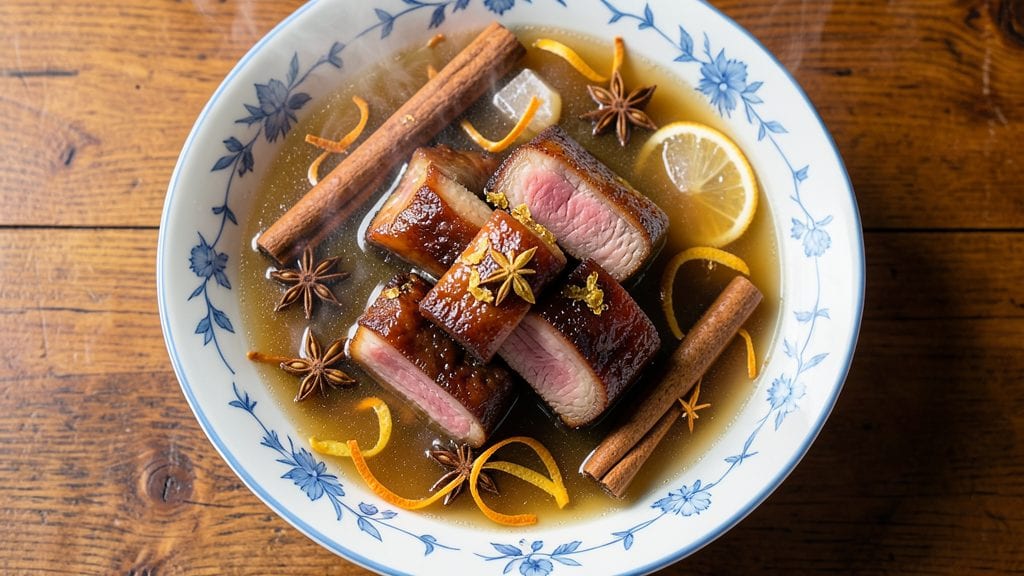
This Chinese oxtail soup recipe delivers the rich, collagen-packed comfort of a traditional Cantonese home remedy—where every spoonful restores warmth and nourishes the body.
The secret lies in slow simmering oxtails with aromatic spices like star anise and cinnamon, transforming tough cuts into melt-in-your-mouth tenderness while extracting a broth so deeply flavorful it tastes like medicine.
I’ve perfected this recipe over years of testing, ensuring the balance of soy, ginger, and rock sugar creates that signature harmony between savory and sweet.
The process begins with a 30-minute prep to prep ingredients—ginger slices, star anise pods, and dried tangerine peel—before the oxtails spend 4 hours simmering in a single pot.
This slow cook transforms oxtail collagen into a velvety broth that coats every spoonful, while the meat becomes so tender it practically dissolves. The result? A soup that’s both restorative and deeply satisfying, packed with umami depth and a natural sweetness from the caramelized aromatics.
What makes this recipe stand out is its authenticity without compromise—no shortcuts, just time-honored techniques that deliver restaurant-quality results at home.
The broth reduces to a rich, golden hue, the oxtails glisten with glossy sheen, and every ingredient plays its part: ginger for warmth, soy for depth, and rock sugar for balance. This is the kind of soup that lingers long after the last bite, warming you from the inside out.
Serve with steamed rice to soak up every drop of that precious broth, or pair with simple greens for a complete meal. The leftovers? Even better the next day as flavors meld further. Ready to make this healing bowl of goodness? Let’s begin.
Ingredients for chinese oxtail soup
Authentic Cantonese ingredients transform tough oxtail into velvety broth and melt-in-your-mouth meat.
| Ingredient | Amount | Notes |
|---|---|---|
| Oxtail Cuts 🦄 | 2 ½ lb | Bone-in, trimmed of excess fat |
| Star Anise Pods 🌟 | 4 whole | Whole, lightly crushed |
| Cinnamon Sticks 🌿 | 2 whole | 2-inch pieces, aromatic grade |
| Dried Tangerine Peel 🍊 | 1 tbsp | Thinly sliced, organic preferred |
| Fresh Ginger Root 🧄 | 3 oz | Unpeeled, sliced into 1/4-inch coins |
| Rock Sugar 🍬 | ½ cup | Or substitute brown sugar |
| Dark Soy Sauce 🍶 | ½ cup | Kikkoman preferred |
| Light Soy Sauce 🍶 | ¼ cup | For color balance |
| Shaoxing Wine 🍷 | ½ cup | Substitute dry sherry if unavailable |
| Green Onions 🧅 | 1 whole | White and green parts separated |
| Fresh Coriander 🌿 | ¼ cup | Stems removed, chopped |
| Sesame Oil 🫒 | 1 tbsp | Toasted, for finishing |
| White Rice 🍚 | 1 ½ cups | Jasmine or long-grain preferred |
| Water 💧 | 8 cups | Filtered for clarity |
| Diamond Crystal Kosher Salt 🧂 | 1 ½ tsp | For seasoning, adjust to taste |
The oxtail is the heart of this dish—bone-in cuts from a reputable butcher yield the richest collagen. Look for oxtails with marbling rather than pure fat, as the fat renders during simmering. For optimal quality, source from Asian markets or specialty butchers, where the cuts are often prepped and vacuum-sealed. If unavailable, substitute beef shank (though texture will differ). The star anise and cinnamon should be whole, aromatic pods—ground spices lose potency quickly. Penzeys Spices carries high-quality whole spices if your local market falls short. Dried tangerine peel can be found in the Asian aisle or ordered online; if unavailable, orange zest adds a similar citrus note, though less complex.
Rock sugar isn't always easy to find, but brown sugar or even white sugar works in a pinch—just reduce by 10% to account for its higher moisture content. Shaoxing wine is non-negotiable for authenticity, but dry sherry or mirin can substitute without drastic flavor shifts. The soy sauces should be high-quality, aged varieties—Kikkoman's dark soy sauce provides the deep color and umami essential for this dish. For ginger, fresh is non-negotiable; dried lacks the aromatic punch. If you must use dried, double the amount and toast it lightly in a dry pan before adding. The sesame oil should be toasted, not flavored—look for brands like Lee Kum Kee or Kadoya for authentic results.
This soup improves with time—plan for at least 4 hours of simmering, ideally 6, for maximum collagen extraction. Store leftovers in airtight containers for up to 5 days in the refrigerator, though the flavor deepens overnight. For longer storage, freeze portions in ice cube trays—perfect for quick meals. The broth can be reduced further for a more concentrated flavor, but preserve at least 4 cups to maintain the soup's signature richness. When reheating, add a splash of water to prevent over-thickening, and finish with a drizzle of sesame oil just before serving.
Why You'll Love This Recipe
- One-Pot Magic: I swear by this recipe—just toss everything into a single pot, simmer, and walk away. No chopping chaos, no multiple pans, just that rich, fragrant broth building itself while you sip tea or scroll through your phone.
- Deep Umami Bomb: The star anise and cinnamon sticks infuse the broth with warmth, while the ginger and tangerine peel add a bright, citrusy edge. That first spoonful? It’s like a hug in a bowl—savory, slightly sweet, and impossible to resist.
- Leftovers That Beg for More: This soup only gets better the next day. The oxtail melts into tender, melt-in-your-mouth perfection, and the broth thickens just enough to make it feel like a cozy, restaurant-quality meal—without the fuss.
- Budget-Worthy Luxury: Oxtail might sound fancy, but it’s actually one of the most affordable ways to stretch a meal into a feast. A few cuts go a long way, and the spices cost pennies. Honestly, it’s my go-to when I want to feel like I’m treating myself without breaking the bank.
Step-by-step instructions for Chinese oxtail soup
Transform tough oxtail into velvety richness through precise layering of aromatics and slow simmering.
Parboil and Blanch the Oxtail
Place the 2.5 lb oxtail cuts in a large stockpot and cover with cold water by 2 inches. Bring to a boil over high heat, then immediately reduce to a simmer for 15 minutes. This parboiling step removes impurities and surface blood that would cloud your broth.
Drain the oxtail and return it to the pot. Add fresh cold water (8 cups) and bring to a rolling boil again. Once boiling vigorously, remove from heat and let the oxtail sit in the hot water for exactly 3 minutes. This blanching step firms the collagen and prepares it for the long braise ahead.
Build the Aromatic Base
In the same pot, add the lightly crushed 4 whole star anise pods, 2 whole cinnamon sticks, 1 tbsp dried tangerine peel, and 3 oz fresh ginger root sliced into ¼-inch coins. Return to medium heat and bring to a gentle simmer for 10 minutes. This step allows the spices to bloom and infuse the water with their essential oils.
Add the blanched oxtail back to the pot along with 0.5 cup rock sugar, 0.5 cup dark soy sauce, 0.25 cup light soy sauce, and 0.5 cup shaoxing wine. Stir gently to combine all ingredients. The sugar will help caramelize the soy sauce, creating depth of flavor in the broth.
Simmer Until Fork-Tender
Bring the liquid to a full boil, then immediately reduce to the lowest possible simmer. Cover the pot and cook for 3 hours, stirring occasionally to prevent scorching. After 3 hours, check the tenderness of the oxtail with a fork - it should pierce through with minimal resistance.
If the broth appears too thin, uncover and simmer for an additional 30-45 minutes to reduce it slightly. The oxtail should have a rich mahogany color and fall apart easily when prodded. This slow cooking process transforms the tough connective tissue into gelatinous collagen that thickens the broth beautifully.
Finish and Serve
Strain the broth through a fine-mesh sieve into a clean pot, pressing gently on the solids to extract maximum flavor. Discard the solids or reserve for another use. Return the strained broth to medium heat and add 1.5 tsp diamond crystal kosher salt, adjusting to taste.
In a separate pot, cook 1.5 cups white rice according to package instructions. To serve, ladle hot broth over individual portions of rice. Garnish each bowl with chopped white and green parts of 1 whole green onions and 0.25 cup fresh coriander. Drizzle with 1 tbsp toasted sesame oil just before serving to enhance aroma and add nutty depth.
Pro Tips For Making Chinese Oxtail Soup
- Brown the Oxtail First: Skip the direct simmer—sear the oxtail cuts in batches over medium-high heat until deep golden brown. This isn’t just for looks; it builds a flavor base that turns your broth from bland to rich, and those caramelized bits stick to the pot like glue—no scraping needed.
- Toast Spices Low and Slow: Warm your star anise, cinnamon sticks, and dried tangerine peel in the pot before adding liquid—just until fragrant (about 30 seconds). I learned the hard way that skipping this step means your soup tastes like perfume instead of food. Keep the heat low or they’ll burn before they release their magic.
- Simmer, Don’t Boil: Once the soup starts cooking, keep it at a gentle simmer—tiny bubbles, not a rolling boil. Oxtail’s collagen melts into gelatin at lower temps, giving you that silky texture. I used to rush it, and my soup ended up tough and watery. Patience here makes all the difference.
- Save the Ginger Juice: After slicing your ginger, squeeze out the excess liquid with your hands before adding it to the pot. Wet ginger dilutes the broth faster, and you’ll end up with a soup that tastes like it’s missing something. Dry it out first—your broth will thank you. (Yes, it’s weird, but it works.)
Regional styles of this chinese oxtail soup
Cantonese Home Style
This is the version I grew up with in my grandmother’s kitchen—where the broth is so rich it’s practically a dessert.
The key difference here is the longer simmer time (5-6 hours) and the addition of dried lily buds (2 tbsp) and red dates (4 whole) to the broth. These ingredients add natural sweetness and a delicate floral note that balances the deep umami.
I like to finish with a sprinkle of toasted sesame seeds instead of oil for extra crunch. 🌱
Sichuan Spicy Twist
For those who love heat, the Sichuan version swaps rock sugar for 1 tbsp chili bean paste and adds 2 tbsp doubanjiang (fermented chili bean paste) when building the aromatic base. The broth gets a smoky, spicy kick from 1 tbsp Sichuan peppercorns, lightly toasted and crushed.
Garnish with thinly sliced scallions and a drizzle of chili oil before serving. The heat wakes up every spoonful! 🌶️
Hong Kong Market Version
This is the soup you’d find at busy Hong Kong street stalls—bold, briny, and packed with texture. The trick here is using double the soy sauce (1 cup total) and adding 1 tbsp fermented black beans for a funky, salty depth.
The oxtails are often served whole on the side, letting diners pull apart the meat with chopsticks. I like to add 1 tbsp oyster sauce at the end for extra richness. The broth is served in small clay pots for maximum heat retention. 🍜
Taiwanese Comfort Style
Taiwanese home cooks often add 1 tbsp goji berries and 1 small daikon radish (sliced) to the broth for a lighter, slightly sweet profile. The radish adds a mild crunch that contrasts beautifully with the tender oxtail.
I also recommend finishing with 1 tsp toasted sesame paste stirred into the broth just before serving—it gives a nutty, almost buttery richness. Serve with steamed buns on the side for dipping. 🥖
Modern Fusion Adaptation
For a contemporary twist, I’ve experimented with adding 1 cup shiitake mushrooms (sliced) to the broth during the last 30 minutes of simmering. The mushrooms absorb the broth’s flavors while adding an earthy depth.
Garnish with microgreens and a squeeze of yuzu juice for a bright, citrusy finish. This version works beautifully as a weeknight dinner with less prep time. 🌿
Nutrition facts
Frequently asked questions
Why does this recipe require parboiling the oxtail twice?
The first boil removes surface impurities and blood that would cloud your broth. The second 3-minute blanch firms the collagen, ensuring it breaks down properly during the long simmer. Skipping this step can result in a broth that's cloudy or oxtail that stays tough.
Can I substitute beef shank for oxtail?
Yes, but the texture and flavor will differ slightly. Beef shank has less collagen, so the broth won't be as rich or gelatinous. For best results, use 3 lb of shank instead of 2.5 lb oxtail to compensate. The simmering time remains the same.
What if my broth turns out too thin?
Simmer uncovered for an additional 30-45 minutes to reduce it naturally. If you need quicker results, remove the oxtail and simmer the broth alone over medium-high heat. For extra thickness, mix 1 tbsp cornstarch with 2 tbsp cold water and stir into the hot broth until it reaches your desired consistency.
How do I know when the oxtail is fully tender?
Use a fork to pierce the thickest part of the oxtail—it should slide in with minimal resistance and the meat should feel fork-tender. If it's still slightly chewy, return it to the pot for another 30 minutes. The broth should also have a rich, mahogany color and coat the back of a spoon.
Can I make this soup in a slow cooker?
Follow the same prep steps, then transfer everything to a 6-quart slow cooker on low for 6-8 hours (or high for 4-5 hours). The slow cooker's gentle heat mimics the stovetop simmer perfectly. Just remember to strain the broth afterward to remove the spices and solids.