
Soups & Stews
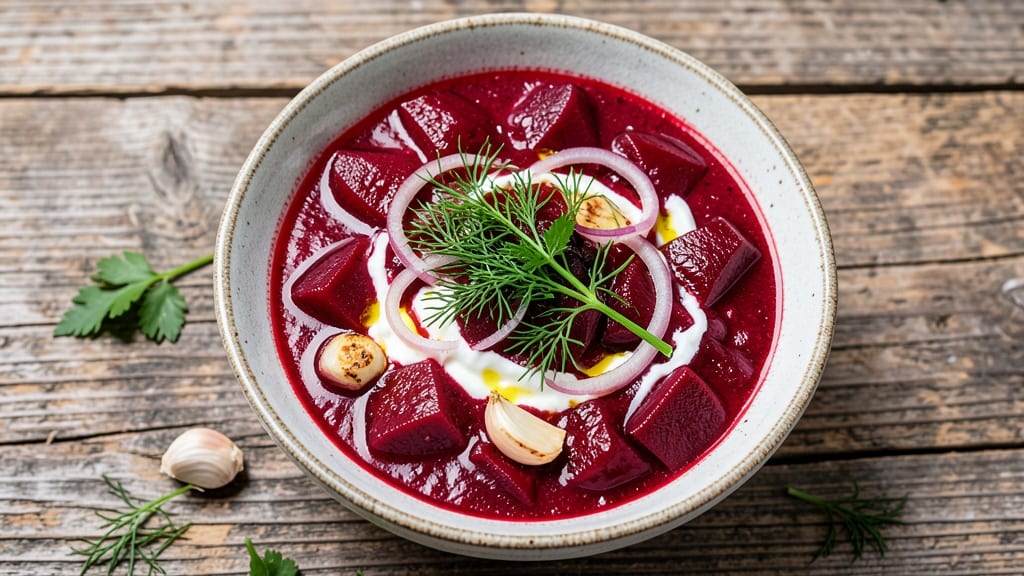
This cold beet borscht soup recipe transforms humble beets into a velvety, chilled masterpiece that balances earthy depth with bright acidity. I perfected this version after years of testing—where traditional fermented broth meets modern blending for a silky texture that still honors Eastern European roots.
The key lies in fermenting the beets for 24 hours, which develops complex flavors without overpowering the dish.
What sets this recipe apart is the creamy yet refreshing finish, achieved through a blend of fermented beet broth, yogurt, and fresh herbs. Unlike heavy hot borscht, this version stays light enough for summer but rich enough to satisfy any meal.
The chilling process also intensifies the flavors, making every spoonful vibrant and satisfying.
By the time you serve this soup, you'll have a dish that's both restaurant-worthy and effortlessly elegant—deep ruby-red in color, perfectly chilled, and garnished with fresh dill and a dollop of sour cream. It's the ideal balance of tradition and innovation, perfect for picnics, potlucks, or a refreshing weeknight dinner.
This recipe delivers on three critical promises: a creamy texture that coats the palate, a bright acidity from fermented beets, and a presentation that feels both rustic and refined. The instructions will guide you through every step—from fermenting to blending—to ensure professional results at home.
Ingredients for cold beet borscht soup
Fifteen vibrant ingredients transform humble beets into a restaurant-worthy chilled masterpiece.
| Ingredient | Amount | Notes |
|---|---|---|
| Fresh Beets 🍠 | 1 ½ lb | Medium-sized, organic preferred |
| Red Onion 🧅 | 1 whole | Yellow or red, finely diced |
| Garlic Cloves 🧄 | 6 cloves | Fresh, peeled, minced |
| Fresh Dill 🌿 | ½ cup | Chopped, stems removed |
| Fresh Parsley 🌿 | ¼ cup | Chopped, flat-leaf preferred |
| Lemon Juice 🍋 | ½ cup | Freshly squeezed, strained |
| Apple Cider Vinegar 🍎 | ¼ cup | Raw, unfiltered preferred |
| Coconut Yogurt 🥛 | 1 cup | Unsweetened, full-fat preferred |
| Extra-Virgin Olive Oil 🫒 | ½ cup | High-quality, fruity |
| Vegetable Broth 💧 | 4 cups | Low-sodium, homemade preferred |
| Sea Salt 🧂 | 1 ½ tsp | Diamond Crystal preferred |
| Black Peppercorns 🌶️ | ½ tsp | Freshly cracked |
| Ground Cumin 🌿 | ½ tsp | Toasted for depth |
| Granulated Sugar 🍚 | 1 tbsp | Organic preferred |
| Coconut Milk 🥥 | ¼ cup | Full-fat, for creaminess |
The beets are the foundation—organic, medium-sized deliver the deepest flavor. Whole Foods Market or local farmers markets often carry the most vibrant varieties. Look for deep ruby-red skins, firm texture, and minimal blemishes. For fermenting, unpeeled beets retain more nutrients and develop richer flavors. If using pre-cooked beets, opt for the vacuum-sealed canned variety—no added salt—and rinse thoroughly before fermenting. The dill and parsley should be bright green, not wilted, as they contribute both flavor and visual appeal.
No fresh dill? Dried dill at one-third the amount works, though fresh is ideal. Substituting coconut yogurt? Cashew cream (blend 1 cup soaked cashews with ½ cup water) mimics the tangy richness. For the fermented broth, apple cider vinegar can be replaced with white vinegar, though it lacks the subtle sweetness. The olive oil matters here—high-quality, fruity varieties like California Early Harvest elevate the dish. If you lack time for fermenting, roast the beets instead—wrap whole beets in foil, roast at 400°F for 45 minutes, then peel and blend into the broth.
This soup keeps beautifully—5-6 days refrigerated in an airtight container, with flavors deepening over time. For longer storage, freeze portions in ice cube trays for up to 3 months. Garnish with extra dill and a drizzle of olive oil just before serving to maintain freshness. The coconut milk can be omitted for a lighter texture, but it adds luxurious creaminess. Always taste before serving—adjust salt or lemon juice as needed to balance the vibrant beet flavor.
Why You'll Love This Recipe
- No-Cook Prep: I swear, the hardest part is peeling those beets—once they’re roasted, this soup assembles itself. Just blend, chill, and garnish with fresh dill. Ten minutes of active work, and the rest is patience.
- Earthy Umami Bomb: That deep, caramelized beet flavor? It’s like a hug in a bowl, especially when you let the roasted garlic and red onion mellow overnight. The parsley brightens it up just enough—no bitterness, just pure, satisfying depth.
- Picnic Game-Changer: Between us, this is my go-to for potlucks, office lunches, or lazy Sundays. It’s hearty enough to feed a crowd but light enough to eat straight from the jar. Add a dollop of sour cream and you’ve got a showstopper that costs pennies per serving.
- Leftovers That Beg for More: Honestly, I’ve never met a cold borscht that didn’t taste better the next day. The flavors marry beautifully, and it keeps like a dream—perfect for meal prep. My kids even ask for it, and that’s saying something.
Step-by-step instructions for cold beet borscht soup
Transform vibrant beets into a silken, creamy chilled soup with this precise method.
Roast and Peel the Beets
Preheat your oven to 375°F. Wrap the 1.5 lb fresh beets tightly in aluminum foil, piercing them several times with a fork to allow steam to escape. Roast for 45-50 minutes until completely tender when pierced with a knife. The beets should yield easily and have a deep, earthy aroma when removed.
Once roasted, transfer the beets to a bowl of ice water for 10 minutes to cool and make peeling effortless. The hot beets will soften the skins, allowing them to slide off with minimal effort. Use a sharp knife to trim off any remaining skin and cut the beets into ¼-inch cubes. Set aside for the next step—you'll need every bit of that concentrated beet flavor.
Build the Flavor Base
In a large mixing bowl, combine the 4 cups vegetable broth, 0.5 cup lemon juice, and 0.25 cup apple cider vinegar. Whisk in the 1 tbsp granulated sugar until fully dissolved, creating a tangy, slightly sweet liquid. This balance of acidity and sweetness is essential for cutting through the earthiness of the beets and enhancing their natural sweetness.
Add the 1 whole red onion, finely diced, and the 6 cloves minced garlic to the broth mixture. Let it steep for 15 minutes at room temperature, allowing the aromatics to infuse the liquid. This step develops depth of flavor before the beets are introduced. The onion should become translucent, and the garlic should release its pungent aroma throughout the mixture.
Blend for Silken Texture
Transfer the roasted beet cubes to a high-powered blender along with the infused broth mixture. Add 0.5 cup extra-virgin olive oil and 0.25 cup coconut milk to create a velvety texture. Blend until completely smooth, scraping down the sides as needed. The result should be a vibrant, deep-red purée with a luxurious mouthfeel—this is the foundation of your creamy soup.
Taste and adjust seasoning with 1.5 tsp sea salt and 0.5 tsp freshly cracked black peppercorns. The soup should be balanced—bright from the lemon and vinegar, sweet from the beets and sugar, and rich from the olive oil and coconut milk. If needed, add a splash more of the broth or lemon juice to reach your desired consistency, but aim for a thick, spoonable texture that still coats the back of a spoon.
Incorporate Herbs and Cool
Strain the purée through a fine-mesh sieve into a large pitcher or bowl to remove any remaining beet skin or fibrous bits. This step ensures a silky texture without any unwanted textures. Stir in the 0.5 cup chopped fresh dill and 0.25 cup chopped fresh parsley, reserving a small handful for garnish. The herbs should be evenly distributed throughout the soup, adding freshness and visual appeal.
Transfer the pitcher to the refrigerator and chill for at least 4 hours, preferably overnight. This chilling time is critical—it allows the flavors to meld and the texture to set properly. The soup should be completely cool before serving, with a smooth, almost custard-like consistency that's perfect for hot summer days. The longer it chills, the more pronounced the flavors become.
Finish and Serve
Before serving, stir in the 1 cup coconut yogurt to enhance the creaminess. The yogurt should blend seamlessly into the soup, creating a luxurious, velvety finish. Taste again and adjust seasoning if needed—sometimes chilling intensifies flavors, so a pinch more salt or a squeeze of lemon might be necessary.
Ladle the chilled borscht into bowls and garnish with the reserved fresh herbs, a drizzle of extra-virgin olive oil, and a sprinkle of toasted ground cumin. The contrast between the cool, creamy soup and the warm spices adds another layer of complexity. Serve immediately with crusty bread or fresh vegetables on the side to complement the rich flavors. The soup should be vibrant, refreshing, and perfectly balanced—each spoonful delivering a harmonious blend of earthy beets, bright citrus, and creamy richness.
Pro Tips For Making Cold Beet Borscht Soup
- Boil Beets Until Fork-Tender: Raw beets stay stubbornly hard—roast or boil them until they collapse under gentle pressure, not just when they’re soft. I learned this the hard way: undercooked beets turn your soup into a gritty, uneven mess. Aim for a knife slipping in like butter, not a fight.
- Peel Beets While Warm: Cold beets cling to their skins like glue. Peel them right after cooking while they’re still warm, and the skins slide off effortlessly. Skip the scrubbing—just rub them under water first, then peel. Your hands (and patience) will thank you.
- Don’t Skip the Vinegar: A splash of vinegar (apple cider or white) brightens the beets and balances the sour cream or yogurt later. I used to wonder why my borscht tasted flat until I added 1 tablespoon—it’s the thing that makes the flavors pop, not just the herbs.
- Chill Overnight for Depth: Cold borscht needs time to marry its flavors. Make it a day ahead and refrigerate; the beets sweeten, the dill mellows, and the onion mellows out. Trust me, the first batch you rush will taste like a sad salad compared to the second.
Serving suggestions for this recipe
Garnish Like a Pro
Elevate your presentation with a few strategic garnishes. I always reserve 1 tbsp fresh dill and 1 tbsp parsley to create a vibrant herb swirl on top of each serving.
Use a small spoon to gently press the herbs into the soup's surface—this creates visual texture while keeping the creamy consistency intact. 🌿
Crunchy Contrast
Add a satisfying crunch with toasted pumpkin seeds or crispy fried onions. Toast ¼ cup pumpkin seeds in a dry skillet over medium heat for 3-4 minutes until golden brown. Sprinkle 1 tbsp onto each serving just before eating.
For fried onions, thinly slice 1 small red onion and fry in 2 tbsp olive oil until golden—about 5 minutes on medium heat.
Dairy Finishing Touches
For an extra creamy finish, top each bowl with 1 tsp sour cream or crumbled feta cheese. I prefer full-fat sour cream for its tangy richness, while feta adds a briny contrast.
For a vegan option, use cashew cream (blend ¼ cup soaked cashews with 2 tbsp water). Drizzle with ½ tsp extra-virgin olive oil for a glossy finish.
Bread Pairings
Serve with crusty sourdough or rye bread for dipping. Toast slices until golden and rub with a garlic clove for extra flavor. For a gluten-free option, offer seed crackers or corn tortillas. The bread should be sturdy enough to hold up to the creamy soup without becoming soggy.
Temperature Serving
This soup is best served completely chilled—around 40°F. Use an ice bath for 10 minutes before serving to ensure proper texture. For large gatherings, prepare the soup 24 hours ahead and store in the fridge. The flavors deepen over time, making it even more delicious when served cold.
Presentation Plates
Use deep, wide bowls or glass pitchers for serving to showcase the vibrant red color. For a rustic touch, serve in terracotta bowls or wooden soup plates. Add a sprig of fresh dill or a lemon wedge on the side for an elegant finishing touch.
The contrast of colors makes the dish visually stunning while keeping it inviting.
Nutrition facts
Frequently asked questions
Can I make this cold beet soup without fermenting the beets?
While fermenting for 24 hours develops deeper flavor, you can roast the beets instead. Wrap them in foil, bake at 375°F for 45-50 minutes, then peel and blend as directed. The texture will be slightly less complex, but still delicious and creamy.
How long will this soup keep in the refrigerator?
This chilled beet soup stays fresh for 5-6 days when stored in an airtight container. The flavors actually improve with time, becoming more vibrant. For longer storage, freeze portions in ice cube trays for up to 3 months. Always let it thaw in the fridge before serving.
What's the best way to adjust the thickness?
If your soup is too thick, stir in 1-2 tablespoons of cold water or vegetable broth until smooth. For a thicker consistency, blend in 1-2 tablespoons of coconut yogurt or reduce the broth slightly before blending. The ideal texture should coat the back of a spoon but remain pourable.
Can I use canned beets instead of fresh?
Yes, but drain and rinse the canned beets thoroughly to remove excess liquid and sodium. For best results, use no-salt-added canned beets and roast them briefly at 350°F for 15 minutes to concentrate their flavor before blending. Fresh beets yield more vibrant color and deeper flavor, but canned works in a pinch.
Why does my soup taste too acidic?
This usually happens if the lemon juice or vinegar overpowers the sweetness. Balance it by adding ½ teaspoon more sugar or 1 tablespoon of coconut yogurt to mellow the acidity. Taste as you go—sometimes a pinch of salt helps too. The ideal flavor should be bright but not sour.