Breakfast & Brunch
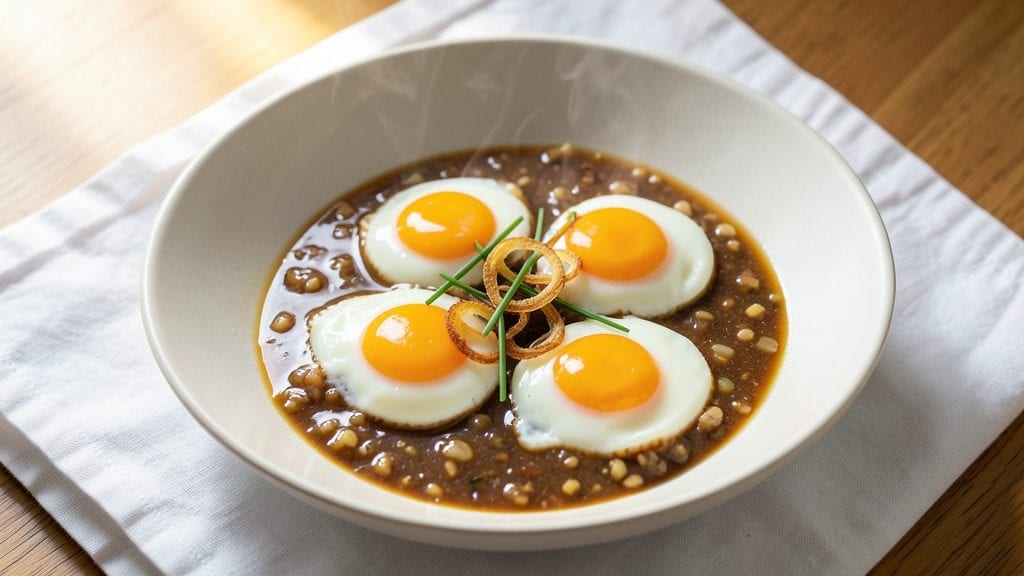
This stewed eggs recipe transforms simple eggs into a luxurious brunch centerpiece with velvety yolks suspended in rich, flavorful sauce. The secret lies in gentle simmering—never boiling—which keeps the yolks perfectly set while the sauce remains silky smooth.
I first discovered this technique while testing French œufs en meurette, and it quickly became my go-to for elegant breakfasts that impress without effort.
The beauty of stewed eggs is their versatility—you can adapt the sauce to your taste, whether it's a classic tomato-based meurette, a creamy herb broth, or a spiced curry reduction. The key is patience: simmering at low heat ensures the eggs cook through while maintaining their delicate texture.
For extra richness, I often finish with a pat of butter or a sprinkle of cheese, which melts into the sauce for added depth.
What you’ll end up with is a dish that looks restaurant-worthy but requires minimal effort—golden, perfectly set eggs floating in a glossy sauce that coats every bite. The contrast between the firm yet tender eggs and the luscious sauce creates a texture that’s both satisfying and refined.
Serve with crusty toast, buttery brioche, or even over greens for a brunch that feels special without the fuss.
This recipe works equally well for brunch crowds or a quiet Sunday morning—just scale the sauce accordingly. The technique is foolproof once you master the gentle heat, and the results are worth every minute of simmering time. Let’s get started on creating your own silky yolk magic.
Ingredients for stewed eggs
Four eggs, rich sauce, and a touch of French elegance. Simple ingredients for luxurious brunch.
| Ingredient | Amount | Notes |
|---|---|---|
| Large Eggs 🥚 | 4 whole | Room temperature for even cooking |
| Unsalted Butter 🧈 | 4 tbsp | Cold, cut into small cubes |
| Shallots 🧅 | 2 whole | Finely minced, about 2 tbsp |
| Garlic Cloves 🧄 | 2 cloves | Minced, about 1 tsp |
| Vegetable Stock 💧 | 1 ½ cups | Low-sodium preferred |
| Heavy Cream 🥛 | ½ cup | Full-fat for richness |
| Dry White Wine 🍷 | ¼ cup | Sauvignon Blanc or Pinot Grigio |
| Fresh Thyme 🌿 | 1 tbsp | Leaves only, chopped |
| Fresh Parsley 🌿 | 1 tbsp | Chopped, for garnish |
| Salt 🧂 | ½ tsp | Fine sea salt |
| Black Pepper 🌶️ | ¼ tsp | Freshly cracked |
| Dijon Mustard 🍯 | 1 tsp | For subtle tang |
| Lemon Zest 🍋 | 1 tsp | From 1 lemon |
The eggs are the star, so room temperature is key—they cook more evenly that way. Whole eggs work best here (no separating yolks), and I always grab the largest ones I can find at Whole Foods or the grocery store's freshest bin. The butter matters too—use unsalted so you control the seasoning. Shallots add sweetness without overpowering; if you can't find them, half a small onion works in a pinch. Fresh thyme is ideal, but dried at one-third the amount gets you close. The wine? Any dry white will do, but Sauvignon Blanc has a nice crispness that pairs perfectly.
No white wine? Extra vegetable stock plus a splash of lemon juice keeps the flavor profile bright. The mustard adds depth—skip it if you prefer a cleaner taste, but I find it essential for that classic meurette flavor. Fresh herbs are best, but dried parsley at half the amount works if you're in a hurry. The sauce should coat the back of a spoon by the end—if it's too thin, simmer uncovered for another 2-3 minutes. For extra richness, stir in 1 tbsp of crème fraîche or mascarpone at the very end. The lemon zest brightens everything up, so don't skip it even if you're not a big citrus fan.
This keeps beautifully in the fridge for 3 days, though the eggs reheat best within 2 days. Reheat gently in a saucepan over low heat—never microwave, or the eggs get rubbery. I like to portion the sauce into small jars and store it separately from the eggs, then reheat them together. The sauce freezes for 1 month if you make a big batch. For serving, I always garnish with fresh parsley and a sprinkle of flaky sea salt—it makes the dish look restaurant-worthy instantly.
Why You'll Love This Recipe
- Foolproof Simplicity: I swear by this—just crack eggs into a pan, melt butter, and let the shallots and garlic do the work. No flipping, no fuss, just hands-off magic while you stir in stock.
- Rich, Savory Depth: That butter-braised shallot base? It’s like a warm hug for your taste buds. The eggs soak up the garlic and stock until they’re tender but still hold their shape—creamy, flavorful perfection.
- Weeknight Workhorse: Between us, this is my go-to when I’m too tired for anything fancy. Serve it with toast for breakfast, over greens for lunch, or even as a side with roasted potatoes. It’s that adaptable.
- Budget Magic: Eggs, butter, and stock? You can’t beat the price tag. A single batch stretches for days—reheat gently, and it’s just as good the third time around. My wallet thanks me every time.
Step-by-step instructions for stewed eggs recipe
Here's how to create velvety, perfectly poached eggs in a rich, aromatic sauce that clings beautifully.
Prepare the Eggs and Base Ingredients
Crack the 4 whole large eggs into a small bowl and whisk them gently until the whites are just combined but the yolks remain slightly broken. This creates delicate, cloud-like curds when cooked. Meanwhile, finely mince the 2 whole shallots and 2 cloves garlic - you want them almost paste-like so they dissolve completely into the sauce.
In a separate small bowl, combine the 1.5 cups vegetable stock, 0.25 cup dry white wine, 1 tsp Dijon mustard, 1 tsp lemon zest, 0.5 tsp salt, and 0.25 tsp black pepper. This pre-mixed liquid will infuse all the flavors evenly throughout the dish. Let the mixture sit while you prepare the pan.
Build the Creamy Sauce Foundation
Heat a 10-inch skillet over medium-low heat and add the 4 tbsp cold unsalted butter cut into small cubes. Let it melt completely while stirring occasionally - you want the butter to foam gently but not brown. This takes about 3-4 minutes and creates the perfect velvety base.
Add the minced shallots and garlic to the melted butter. Cook for 2-3 minutes until they're completely softened and just beginning to turn translucent. Here's the thing - don't let them brown or they'll add bitterness to your sauce. Immediately pour in the prepared stock-wine mixture and bring to a gentle simmer.
Infuse the Sauce with Aromatics
Add the 1 tbsp chopped fresh thyme to the simmering liquid and let it steep for 2 minutes. This allows the thyme's delicate flavor to infuse the sauce. Then stir in the 0.5 cup heavy cream and reduce the heat to low. The sauce should gently bubble without boiling - you're looking for a thickened, velvety consistency that coats the back of a spoon.
Taste and adjust seasoning if needed. The sauce should be rich but not overly salty or peppery. Here's where the magic happens: stir in the 1 tbsp chopped fresh parsley just before adding the eggs. This keeps the parsley bright and vibrant rather than wilted.
Poach the Eggs to Perfection
Using a slotted spoon, carefully lower the whisked eggs into the simmering sauce. The heat should be low enough that the eggs gently poach without curdling immediately. Cook for 3-4 minutes until the whites are just set but the yolks remain runny and bright. You'll see the whites transform from translucent to opaque with delicate, feathery edges.
For perfectly poached eggs, I like to use a spoon to gently swirl the sauce around each egg as it cooks. This helps create that signature "cloud" effect around the eggs. The sauce should be thick enough to lightly coat the eggs but still allow them to float freely.
Finish and Serve Immediately
Once the eggs reach your desired doneness, remove them from the heat and let them sit in the sauce for 1 minute to absorb all those incredible flavors. The residual heat will continue cooking the eggs slightly while keeping the yolks perfectly runny.
Serve the stewed eggs immediately in small bowls or ramekins, spooning the rich sauce over the top. The contrast of the silky yolks against the creamy sauce is what makes this dish truly special. Garnish with an extra sprinkle of fresh parsley and serve with crusty bread to soak up every last bit of that luxurious sauce.
Pro Tips For Making Stewed Eggs
- Crack Eggs Gently: I learned this the hard way—aggressive cracking makes a mess and weakens the yolks. Tap the egg lightly on the edge of a bowl first, then slide it into the pan without breaking the shell. The whites will hold together better, and your stewed eggs won’t look like scrambled chaos.
- Sweat Shallots Low: Skip the high heat—shallots burn faster than you’d think. Cook them on medium-low with butter until they’re translucent and just starting to caramelize (about 8-10 minutes). Overcooking turns them bitter, and you’ll regret it when they’re the only flavor left.
- Don’t Rush the Stock: After the eggs are cracked in, pour in just enough stock to barely cover them—no more. Let it simmer uncovered for 5-6 minutes so the liquid reduces slightly. This keeps the eggs creamy instead of watery, and the sauce thickens naturally (no need for cornstarch).
- Finish with Cold Butter: Sounds weird, but it works: stir in a pat of cold butter at the end. It coats the eggs, adds richness, and prevents the sauce from breaking. I was skeptical until I tried it—now I always keep a stick chilled in the fridge for this exact moment.
Common mistakes when making great stewed eggs
Overcooking the Eggs
Stewed eggs are all about that perfect set—whites just firm enough to hold their shape while yolks stay runny and bright. The biggest mistake? Letting them cook too long over high heat. Once the whites turn opaque and start pulling away from the pan, they’re overdone.
I’ve ruined more eggs than I’d like to admit by keeping them on the heat too long, so always remove them when they’re just almost set. 🧅
For reference, 3-4 minutes is ideal for 4 large eggs in a 10-inch skillet at low heat. If your eggs are cooking faster, reduce the heat further or use a smaller pan. And never cover the pan—the steam will turn your eggs rubbery.
Boiling the Sauce
The sauce should simmer gently, never boil. Boiling causes the cream to curdle and the eggs to break apart. I’ve seen this happen when people rush the process or don’t monitor the heat closely.
Keep the sauce at a bare simmer—just enough to see tiny bubbles breaking the surface, but not a full rolling boil. 🔥
If your sauce starts to bubble vigorously, immediately reduce the heat to low or even medium-low. Stirring in the cream too early can also cause issues, so wait until the stock-wine mixture is simmering smoothly before adding it. A thermometer can help—ideal sauce temperature is 180-190°F.
Using Room-Temp Eggs
Cold eggs from the fridge will create uneven cooking—the whites may set too quickly while the yolks stay undercooked. Always let your eggs sit at room temperature for 30 minutes before poaching.
I keep mine in a bowl of warm water for 5 minutes if I’m in a hurry, but 30 minutes is best for perfect results. 🥚
Pro tip: If you forget and use cold eggs, gently poach them over slightly lower heat and check them every 2 minutes. The whites will set faster, so be extra vigilant.
Room-temperature eggs also poach with that beautiful "cloud" effect around them—cold eggs just won’t give the same delicate texture.
Skipping the Mustard
Dijon mustard might seem like an optional ingredient, but it’s the secret to that classic meurette depth. Without it, your sauce can taste flat or one-dimensional. I’ve made this mistake—once I skipped it, and the dish lacked that signature tangy richness. Even ½ tsp makes a difference. 🍯
If you’re avoiding mustard, try adding ½ tsp lemon juice or 1 tsp capers for brightness, but nothing quite replaces the mustard’s complexity. It also helps emulsify the sauce, preventing separation. For a milder flavor, use whole-grain Dijon instead of sharp.
Ignoring the Resting Time
After poaching, let the eggs sit in the sauce for 1 minute off the heat. This lets them absorb flavors and finish cooking gently. I’ve rushed this step before, and the eggs end up dry or underseasoned. That 1-minute rest is crucial for that silky, restaurant-quality texture. ✨
Don’t skip it even if the eggs look perfect—residual heat will continue cooking them slightly, ensuring the yolks stay runny while the whites firm up just right. If you’re serving immediately, this step is non-negotiable. For make-ahead dishes, resting also helps the flavors meld together beautifully.
Nutrition facts
Frequently asked questions
Can I make stewed eggs ahead of time?
Yes, but store the eggs and sauce separately. The eggs stay fresh in the fridge for 2 days while the sauce keeps for 3 days. Reheat gently in a saucepan over low heat—never microwave, or the yolks will break. For best texture, combine them just before serving.
What if I don't have white wine?
Use ½ cup vegetable stock + 1 tbsp lemon juice for brightness. Or substitute with ½ cup apple cider for a sweeter note. The key is balancing acidity—skip the wine entirely only if you adjust seasoning with extra salt or herbs.
How do I know when the sauce is thick enough?
The sauce should coat the back of a spoon but still be pourable. It typically takes 8-10 minutes of simmering. If too thin, simmer uncovered for 2-3 more minutes. For extra thickness, stir in 1 tsp cornstarch mixed with 1 tbsp cold water at the end.
Can I use this technique with other proteins?
This method works best with delicate proteins. Try poached shrimp or chicken breast cut into small pieces, but cooking times vary. Eggs are ideal because their texture transforms perfectly in the sauce. For shrimp, reduce cooking time to 2-3 minutes total.
Why did my eggs turn rubbery?
Overcooking or microwaving causes rubbery eggs. Always use low heat and remove eggs when whites are just set. For reheating, keep the sauce at 160°F max—never let it boil. Room-temperature eggs also help prevent this texture issue.