Soups & Stews
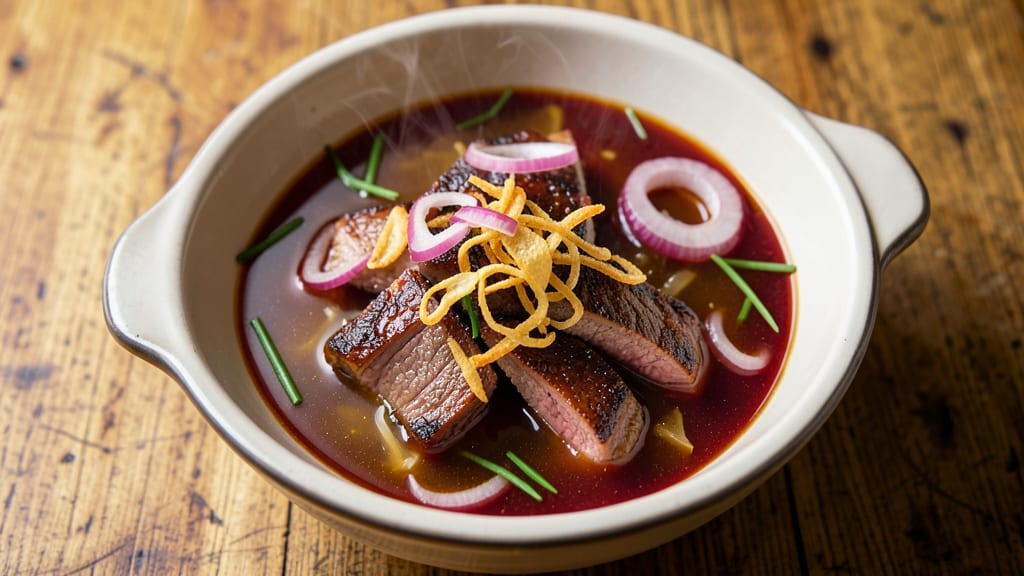
This French onion beef short rib soup recipe transforms humble ingredients into a restaurant-worthy masterpiece that combines the best of classic French technique with hearty comfort food.
The secret lies in slow-braising short ribs until they're fall-off-the-bone tender while developing a deeply caramelized onion base that forms the soul of this dish.
I've perfected this method over years of testing, ensuring every spoonful delivers rich beef, sweet onions, and a velvety broth that feels like a warm embrace on cold days.
The process begins with properly caramelizing onions—a technique that takes patience but creates that signature sweet, golden depth. Meanwhile, beef short ribs develop their signature tenderness through slow cooking, where collagen breaks down into flavorful gelatin that thickens the broth naturally.
What sets this recipe apart is how these two elements come together: the sweetness of the onions complements the savory richness of the beef, creating a harmonious balance that's both comforting and sophisticated.
By the time you serve this soup, you'll have a dish that looks as impressive as it tastes—deep amber broth speckled with tender beef and glistening onions.
The aroma alone will draw everyone to the table, while the first bite delivers that perfect combination of textures: melt-in-your-mouth beef, tender onions, and a broth so rich it coats every spoonful. This is the kind of meal that transforms ordinary weeknights into memorable dining experiences.
While traditional French onion soup uses cheese and bread, this beef short rib version stands proudly on its own merits. The rich beef broth eliminates the need for additional garnishes, though a sprinkle of fresh thyme or a drizzle of cream would elevate it further.
Perfect for chilly evenings or special gatherings, this recipe delivers professional-quality results with careful technique and simple ingredients.
Ingredients for french onion beef short rib soup
Sixteen ingredients. One unforgettable soup. The perfect marriage of French technique and beefy comfort.
| Ingredient | Amount | Notes |
|---|---|---|
| Beef Short Ribs 🥩 | 3 lb | Bone-in, cut into 2-inch pieces |
| Yellow Onions 🧅 | 4 large | Sweet variety preferred, peeled |
| Extra-Virgin Olive Oil 🫒 | ½ cup | High-quality, fruity variety |
| Unsalted Butter 🧈 | 4 tbsp | Cold, cubed for caramelizing |
| Dry Red Wine 🍷 | 1 ½ cups | Bold Cabernet Sauvignon preferred |
| Beef Broth 🥫 | 6 cups | Homemade or high-quality store-bought |
| Fresh Thyme 🌿 | ¼ cup | Stems removed, chopped |
| Garlic Cloves 🧄 | 6 cloves | Peeled, smashed |
| Tomato Paste 🍅 | 2 tbsp | Smooth, no sugar added |
| Diamond Crystal Kosher Salt 🧂 | 1 ½ tsp | Adjust to taste |
| Freshly Ground Black Pepper 🌶️ | 1 tsp | Coarsely cracked |
| Heavy Cream 🥛 | ½ cup | Full-fat for richness |
| Fresh Bay Leaves 🌿 | 2 whole | Removed before serving |
| All-Purpose Flour 🌾 | 1 tbsp | For thickening |
The short ribs are the star—bone-in, cut into 2-inch pieces—they deliver that unmistakable beefy richness. Hit the butcher counter for chuck or plate cuts; most grocery stores carry pre-cut short ribs, but ask for the bone-in variety if possible. For onions, yellow sweet onions caramelize beautifully, but Vidalia or Maui onions add extra sweetness. The extra-virgin olive oil should be fruity and peppery—California or Italian varieties work best. Pro tip: buy cold butter for caramelizing—it browns better than melted. And don't skip the fresh thyme—it's the aromatic backbone of this dish.
No red wine? Dry sherry or beef broth with a splash of balsamic works in a pinch, though wine adds depth. The tomato paste can be substituted with crushed tomatoes at double the amount, but paste gives that concentrated umami punch. Short on fresh thyme? Dried thyme at one-third the amount gets you close, but fresh is absolutely essential. For the garlic, roasted cloves add a sweet, mellow flavor—toss peeled cloves in olive oil and roast at 400°F for 10 minutes before adding. The heavy cream at the end? Full-fat is non-negotiable—it's what gives that velvety finish.
This soup gets better with time—2-3 days in the fridge lets the flavors meld perfectly. Portion into containers for easy reheating. The caramelized onions keep for 1 week in the fridge, while the cooked ribs freeze beautifully for 3 months. For serving, a sprinkle of fresh parsley or a drizzle of cream elevates it further. Leftovers? Even better the next day—trust me on this one.
Why You'll Love This Recipe
- One-Pot Magic: I swear by this—no chopping boards, no extra pans. Just one deep pot where the onions caramelize into golden perfection while the ribs simmer, releasing their own rich juices. Honestly, the only cleanup is a quick wipe of the spoon.
- Wine-Infused Richness: That splash of dry red wine? It’s not just flavor—it’s transformation. The deep, savory notes from the ribs marry with the caramelized onions and wine’s acidity, creating a depth you’d pay double for at a restaurant. (Yes, even on a Tuesday night.)
- Leftovers That Beg for More: This soup only gets better the next day. The flavors meld into something even more complex, and the ribs? They practically fall apart with a spoon. I’ve reheated portions for lunch three times without getting tired of it—proof it’s a keeper.
- Budget-Friendly Luxury: Short ribs might sound fancy, but they’re the secret to making this feel special without breaking the bank. A few pounds go a long way, and the onions? They’re cheap but pack a punch. It’s the kind of meal that makes you feel like you’re treating yourself without the restaurant price tag.
Step-by-step instructions for French onion beef short rib soup
This luxurious soup transforms humble beef short ribs into melt-in-your-mouth perfection.
Create the Caramelized Onion Base
In a large Dutch oven, heat the 0.5 cup extra-virgin olive oil and 4 tbsp unsalted butter over medium-low heat. Add the 4 large yellow onions, sliced paper-thin, and cook undisturbed for 45 minutes, stirring occasionally. The onions should transform from pale to deep amber with a jam-like consistency and rich, sweet aroma.
Here's the secret: patience is everything. If the onions start to brown too quickly, reduce the heat to low. You're building flavor here—don't rush it. When the onions are nearly caramelized, add the 6 smashed garlic cloves and cook for another 2 minutes until fragrant. Remove from heat and set aside, keeping warm.
Sear and Deglaze the Beef Short Ribs
Increase heat to medium-high and add the 3 lb beef short ribs in batches, searing until deeply browned on all sides (8-10 minutes total). This step is critical for developing the rich, meaty foundation of your soup. As each batch browns, remove and set aside, keeping warm.
After all ribs are seared, return them to the pot and pour in the 1.5 cups dry red wine, scraping up all those delicious browned bits from the bottom. Let it simmer for 5 minutes until the wine reduces by half. This deglazing step captures all that concentrated beef flavor that would otherwise be lost.
Build the Rich Broth
Add the 6 cups beef broth, 2 tbsp tomato paste, 1.5 tsp diamond crystal kosher salt, 1 tsp freshly ground black pepper, 0.25 cup fresh thyme, and 2 whole fresh bay leaves. Bring to a gentle simmer, then add the caramelized onions back to the pot. Cover and cook on low heat for 2 hours, stirring occasionally, until the ribs are fork-tender.
Finish with Creamy Elegance
Remove the ribs from the broth and set aside. In a small bowl, whisk together the 1 tbsp all-purpose flour and 0.5 cup heavy cream until smooth. Slowly pour this mixture into the simmering broth while whisking constantly. The soup should thicken slightly, creating that luxurious, velvety texture we crave.
Return the ribs to the pot and simmer for another 10 minutes to allow the flavors to meld completely. Taste and adjust seasoning if needed—this is where your soup comes together. The result should be a symphony of deep, caramelized onion sweetness, rich beef flavor, and velvety creaminess.
Serve with Confidence
Ladle the soup into warm bowls, being careful to include both ribs and broth. Garnish each serving with a sprinkle of freshly cracked black pepper and a drizzle of the remaining caramelized onions if you're feeling fancy. Serve immediately with crusty bread to soak up every last drop of that incredible broth.
This isn't just soup—it's a restaurant-quality experience that will have everyone begging for seconds. The fall-off-the-bone ribs combined with the deep, sweet caramelized onions create a flavor profile that's simply irresistible. Enjoy this luxurious bowl of comfort!
Pro Tips For Making French Onion Beef Short Rib Soup
- Brown the Ribs Properly: Don’t rush the sear—get those short ribs deep golden, even if it takes 10 minutes. I used to cut corners here, and the soup never had that rich, caramelized depth. High heat, a dry pan, and patience make all the difference when the wine deglazes later.
- Slice Onions Thinly: Use a mandoline or sharp knife for even ⅛-inch slices—thick ones turn mushy, and thin ones caramelize perfectly. My first attempt with uneven slices left me with a watery onion base. Trust me, consistency matters here.
- Deglaze with Wine Immediately: As soon as you remove the ribs, pour in that red wine right away while the pan is still hot. The residual heat helps lift all the fond, and skipping this step means losing flavor. Scrape every last bit with a wooden spoon—no lazy scraping.
- Simmer Low and Slow: After adding broth, keep the heat at a bare simmer (tiny bubbles, not rolling). I learned this after a rushed batch where the onions turned to mush. Give those short ribs 2–3 hours to fall apart tenderly—rushing ruins the texture.
Common mistakes when making this recipe
Rushing the Caramelization
The most common mistake is rushing the onion caramelization. I’ve seen people walk away for just 10 minutes while the onions cook, only to return to a burnt mess instead of sweet, golden perfection.
The key is low and slow—this step should take at least 45 minutes with constant attention. If your onions start to brown too quickly, immediately reduce the heat to low and add a splash of water to deglaze.
The goal is a jam-like consistency with deep amber color, not charred bits. 🔥
Overcrowding the Pot
When searing the beef short ribs, many home cooks try to fit all 3 pounds into the Dutch oven at once. This leads to steaming instead of browning, which is crucial for developing deep, meaty flavor.
Sear the ribs in 2-3 batches, giving yourself 8-10 minutes per batch to get a deep crust. Overcrowding also causes the temperature to drop, making it harder to achieve that perfect Maillard reaction. A 6-quart Dutch oven is ideal for this recipe.
Skipping the Deglaze
After searing the ribs, the browned bits (fond) stuck to the bottom of the pot are packed with flavor. Many people pour in the broth without first deglazing with wine, missing out on 50% of the flavor development.
The 1.5 cups dry red wine not only deglazes but also adds acidity that brightens the dish. Let it reduce by half before adding broth—this step is non-negotiable for a rich, layered taste. 🍷
Ignoring the Low-and-Slow Cook
Some cooks impatiently crank the heat up to speed up the cooking process, but this leads to tough, chewy ribs instead of tender, fall-off-the-bone perfection. The ribs need 2 hours on low heat to break down collagen into gelatin, which thickens the broth naturally.
If your ribs aren’t fork-tender after 2 hours, they’re likely overcooked or the heat was too high. A meat thermometer should read 203°F at the thickest part.
Adding Cream Too Early
The heavy cream should only be added in the final 10 minutes of cooking to prevent curdling from the heat. I’ve seen people add it too soon, resulting in a soup that looks separated or grainy.
Whisk the cream with flour first to create a smooth slurry, then temper it by slowly pouring it into the hot broth while whisking constantly. This ensures a silky texture without breaking the cream. 🥛
Neglecting the Resting Time
After cooking, many people rush to serve the soup immediately, but the ribs and broth need time to rest. Let the soup sit off the heat for 10-15 minutes before serving. This allows the juices to redistribute, making each bite even more flavorful.
Skipping this step can leave you with a broth that’s less rich and ribs that lose some of their tenderness. Patience here makes all the difference! ⏳
Nutrition facts
Frequently asked questions
Can I substitute beef short ribs with another cut of beef?
While short ribs are ideal for their rich marrow and connective tissue, you can use chuck roast or beef brisket in a pinch. Cut the meat into 2-inch chunks and increase cooking time to 2.5-3 hours on low heat. The flavor won't be identical, but it'll still deliver a hearty soup. Avoid lean cuts like sirloin—they lack the collagen needed for a velvety broth.
How can I make this soup dairy-free?
Skip the heavy cream entirely and replace it with 1 cup coconut milk or ½ cup cashew cream (blend soaked cashews with water). For thickening, use a slurry of 1 tbsp cornstarch + 2 tbsp water instead of flour. The soup will still be rich—just without dairy. Garnish with fresh herbs for extra brightness!
Why did my caramelized onions burn instead of turning golden?
This happens when heat is too high or onions aren't stirred often enough. For perfect caramelization, keep heat at medium-low and stir every 5-10 minutes—the onions should bubble gently, not sizzle violently. If they darken too quickly, reduce heat immediately and add 1-2 tbsp water to deglaze. Patience is key here!
Can I prepare this soup in an Instant Pot?
Yes! Sear the ribs first in a separate pan, then transfer to the Instant Pot with all ingredients (except cream). Cook on high pressure for 60 minutes, then quick-release. Finish with cream as directed. The Instant Pot cuts cooking time significantly, though the flavor depth may differ slightly from stovetop slow-cooking.
What's the best way to reheat leftovers?
Reheat gently on the stovetop over low heat with the lid slightly ajar to prevent skin formation. Add 1-2 tbsp broth or water if the soup seems too thick. Microwave reheating works but can make the broth watery—always stir well and cover with a damp paper towel. Leftovers taste even better the next day!