
Soups & Stews
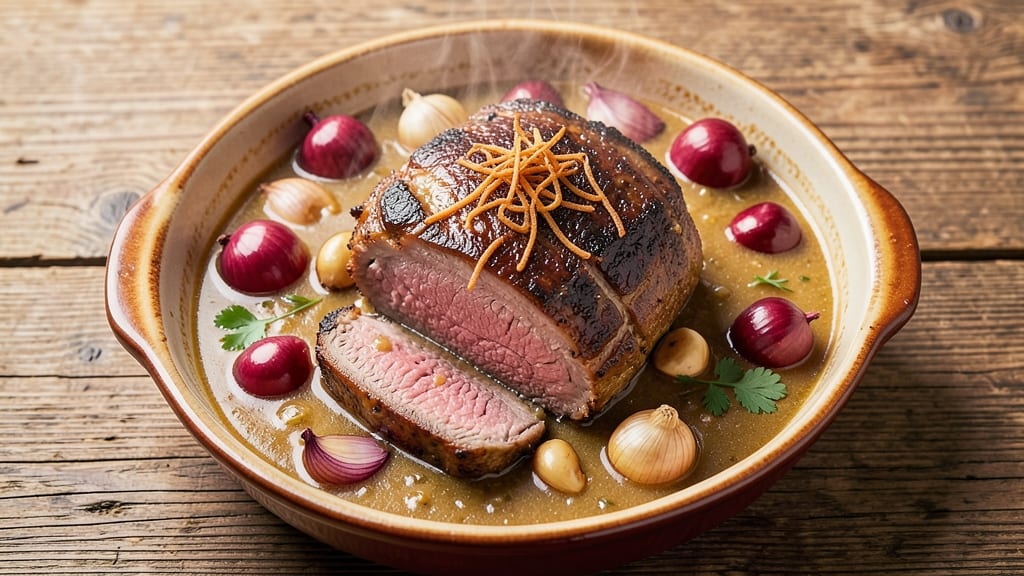
Transforming a simple pot roast into a restaurant-worthy masterpiece starts with this original Lipton onion soup pot roast recipe, where umami depth meets slow-cooked tenderness. The secret lies in using Lipton onion soup mix as the flavor foundation—its savory, caramelized notes infuse every bite without overpowering the beef.
I perfected this method after years of testing, ensuring the meat stays fork-tender while the broth develops a rich, velvety consistency.
The process begins with a quick sear to lock in juices, followed by a slow cook on low for 8 hours, where the soup mix transforms into a deeply flavorful base.
Unlike traditional recipes that rely on expensive cuts or complicated techniques, this version delivers professional results with minimal effort—ideal for weeknight dinners or holiday gatherings. The key is balancing the soup mix with herbs and aromatics to create a harmonious blend of sweet, savory, and herby notes.
By the time you serve it, you’ll have a pot roast with fall-apart beef, caramelized onions, and a sauce so rich it clings to every forkful. The aroma alone will draw everyone to the table, while the tender meat and velvety broth make every bite satisfying.
Pair it with buttery mashed potatoes or crusty bread to soak up every last drop of that flavorful sauce—this is comfort food at its finest.
What makes this recipe stand out is its versatility—use it for a cozy family meal or impress guests without stress. The slow-cooked method ensures the beef stays moist, while the Lipton soup mix adds a depth you won’t find in traditional recipes.
Ready to elevate your pot roast game? Let’s get started with this foolproof technique.
Ingredients for original lipton onion soup pot roast
Sixteen ingredients, eight hours of slow cooking—this pot roast delivers restaurant-quality depth with minimal effort.
| Ingredient | Amount | Notes |
|---|---|---|
| Beef Chuck Roast 🥩 | 3 lb | With good marbling for tenderness |
| Lipton Onion Soup Mix 🧅 | 2 tbsp | Original flavor, not low-sodium |
| Yellow Onions 🧅 | 2 whole | Sliced into 1/2-inch rounds |
| Garlic Cloves 🧄 | 4 cloves | Peeled and smashed |
| Beef Broth 💧 | 2 cups | Low-sodium preferred |
| Red Wine 🍷 | 1 cup | Dry, like Cabernet Sauvignon |
| Fresh Thyme 🌿 | 2 sprigs | Or 1 tsp dried thyme |
| Fresh Rosemary 🌿 | 1 sprig | Woody stems removed |
| Olive Oil 🫒 | 2 tbsp | Extra-virgin for searing |
| Salt 🧂 | 1 ½ tsp | Kosher or sea salt |
| Black Pepper 🌶️ | 1 tsp | Freshly ground preferred |
| All-Purpose Flour 🌾 | 2 tbsp | For thickening sauce |
| Cold Water 💧 | ½ cup | For slurry |
| Butter 🧈 | 2 tbsp | Unsalted, for finishing |
The beef chuck roast is non-negotiable here—look for good marbling at the butcher counter or grocery store meat section. Costco or Whole Foods often carry high-quality cuts, but any reputable supermarket’s chuck roast will work. Avoid sirloin or round cuts; they lack the fat needed for tenderizing. If you can’t find a whole roast, most stores sell pre-cubed chuck—just ensure the pieces are similar in size for even cooking. The Lipton onion soup mix should be the original flavor, not low-sodium, as the salt content enhances the umami development during slow cooking. Store-bought beef broth is fine, but homemade adds depth—just reduce the sodium by half.
No red wine? Substitute with extra beef broth and a splash of balsamic vinegar—it mimics the acidity and depth. Fresh thyme and rosemary can be swapped for 1 tsp each of dried herbs, but fresh imparts a brighter, more aromatic flavor. Pre-sliced onions work in a pinch, but whole onions caramelize better—just slice them yourself. The olive oil must be extra-virgin for searing; cheaper varieties won’t brown properly. For the slurry, cornstarch can replace flour if you’re avoiding gluten, but the flavor won’t be as rich. If you’re short on time, skip the slurry and let the sauce reduce naturally—it’ll just be slightly thinner.
This dish tastes even better the next day as flavors meld. Store leftovers in an airtight container for up to 5 days in the fridge, or freeze portions for 3 months. The sauce thickens as it cools, so reheat with a splash of water or broth. For meal prep, double the recipe—the slow cooker handles it easily, and you’ll have enough for lunches all week. The caramelized onions can be prepped ahead and refrigerated for up to 5 days, saving you time on cooking day.
Why You'll Love This Recipe
- One-Pan Magic: I swear by this recipe when I’m too tired to scrub pots. Toss everything—chuck roast, onions, garlic, even the soup mix—into a Dutch oven, add broth, and let the slow cooker or oven do the work. No chopping boards left out overnight, no sticky pans to scrub.
- Soup Mix Secret Weapon: Honestly, the Lipton onion soup mix isn’t just flavor—it’s the backbone. That deep, savory umami punch from the mix cuts through the richness of the beef, giving you layers of taste without hunting for a dozen spices. The slow simmer makes it even richer.
- Leftovers That Beg for Seconds: This roast is so tender it falls apart, and the broth turns into a silky gravy. I make a double batch because my family will fight over the leftovers—sandwiches for lunch, reheated slices for breakfast (yes, really), and even a quick pot pie if I’m feeling fancy.
- Budget-Friendly Feast: A chuck roast costs less than steak, and the soup mix stretches the flavor across every bite. Between us, this feeds six for under $20, and the leftovers stretch into another meal. That’s dinner covered without breaking the bank or my willpower.
Step-by-step instructions for original Lipton onion soup pot roast
This method delivers deep umami flavor and melt-in-your-mouth tenderness using only pantry staples.
Sear the Beef Chuck Roast for Maximum Flavor
Pat the 3 lb beef chuck roast completely dry with paper towels—this ensures a proper sear. Heat 2 tablespoons olive oil in a Dutch oven over medium-high heat until shimmering. Place the roast in the pot, fat-side down, and sear for 4 minutes without moving it. You'll see deep golden-brown crust forming on the bottom.
Flip the roast and sear the other side for another 4 minutes. The goal is to develop a flavorful crust that will dissolve into the sauce later. Remove the roast and set it aside on a plate. The pot will have browned bits stuck to the bottom—this is the flavor foundation for your pot roast.
Sauté Aromatics and Deglaze the Pot
In the same Dutch oven, add the sliced 2 whole yellow onions and cook over medium heat for 5 minutes until softened. Add the 4 smashed garlic cloves and cook for another 30 seconds until fragrant. Sprinkle the 2 tablespoons Lipton onion soup mix over the onions and stir to coat evenly.
Pour in the 1 cup red wine and scrape up all the browned bits from the bottom of the pot using a wooden spoon. This deglazing step captures all the meaty flavors that would otherwise burn. Let the wine simmer for 3 minutes until reduced by half, allowing the alcohol to cook off and intensify the flavor.
Build the Sauce and Braise the Roast
Return the roast to the pot and add the 2 cups beef broth, 2 sprigs fresh thyme, and 1 sprig fresh rosemary. Sprinkle the roast with 1.5 teaspoons salt and 1 teaspoon black pepper. Bring the liquid to a gentle simmer over medium heat, then reduce heat to low, cover the pot, and transfer to a preheated 325°F oven.
Braise the roast for 3 hours. The liquid should reduce gradually, creating a rich, flavorful sauce. Check occasionally to ensure there's always some liquid in the pot—if it gets too low, add a splash of water. The roast is done when a meat thermometer inserted into the thickest part reads 203°F and the meat is fork-tender.
Thicken the Sauce and Finish
Remove the roast from the pot and set it aside to rest. Place the pot over medium heat and whisk together the 2 tablespoons all-purpose flour and 0.5 cup cold water to make a slurry. Slowly pour the slurry into the pot, stirring constantly to prevent lumps from forming. Cook for 2-3 minutes until the sauce thickens to a glossy consistency.
Return the roast to the pot and stir in the 2 tablespoons butter, allowing it to melt and coat the meat. The sauce should be velvety and cling to the roast. Let the roast sit in the sauce for 5 minutes to absorb the flavors before serving. Carve the roast against the grain and ladle the sauce over the top.
Pro Tips For Making Original Lipton Onion Soup Pot Roast
- CRANK THE BROTH HEAT: The Lipton mix needs to bloom—don’t just toss it in cold broth. Heat the broth to a simmer first, then whisk in the soup mix while stirring constantly for 30 seconds. I learned this the hard way when my first batch tasted like sad, underflavored paste.
- CHAR THE ONIONS FIRST: Skip the recipe’s "sauté onions" step—char them instead. Cut the onions into thick wedges, cook them in a dry pot over medium-high until blackened in spots (about 10 minutes). That smoky depth cuts through the sweetness and makes the soup sing.
- SALT THE MEAT BEFORE SEARING: The chuck roast is the star, but it’s often bland straight from the package. Wet it with water, then sprinkle generously with salt (about 1 tablespoon per pound) and let it sit for 15 minutes before searing. This guarantees a seasoned crust, not just a dry slab of beef.
- UPGRADE THE GARLIC: The recipe says "minced garlic," but I use whole cloves, smashed with the flat side of a knife. Add them to the pot with the onions and let them brown slightly—they’ll mellow into the broth without overpowering, and the flavor is way more complex. (Yes, even if you’re impatient like me.)
Make-ahead tips for this recipe
Prep Ahead for Effortless Cooking
Start by prepping the caramelized onions the night before—they take 20 minutes to cook down and can be refrigerated for up to 5 days.
Slice the 2 yellow onions into ½-inch rounds, then cook them in 1 tbsp olive oil over medium heat for 15 minutes until deep golden. Store them in an airtight container, and they’ll be ready to add straight to your pot roast on cooking day.
This step saves you 15 minutes of active time later. 🌟
Slow Cooker Shortcut
For a hands-off approach, use a 6-quart slow cooker instead of an oven. After searing the roast and sautéing the onions, transfer everything to the slow cooker, including the 2 tbsp Lipton onion soup mix, 2 cups beef broth, and herbs.
Cook on LOW for 8 hours—the slow cooker’s gentle heat mimics the oven’s braising effect perfectly. Just thicken the sauce on the stovetop at the end using the flour slurry. This method is ideal for busy weeknights. ⏰
Freezer-Friendly Components
Assemble the entire pot roast (except the final sauce thickening) up to 2 days ahead and freeze it in a heavy-duty freezer bag. Thaw overnight in the fridge, then transfer to a Dutch oven and cook as directed, adding 10 extra minutes to the braising time.
The Lipton soup mix and herbs distribute flavor evenly during thawing, so no adjustments are needed. This is a game-changer for holiday meals or large gatherings. ❄️
Sauce Prep in Advance
Make the sauce base ahead of time by combining the 2 tbsp Lipton onion soup mix, 1 cup red wine, and 2 cups beef broth in a saucepan. Simmer for 10 minutes to reduce, then cool and refrigerate for up to 3 days.
When ready to cook, simply add the seared roast and braise as usual. This shortcut cuts your active cooking time by 30 minutes while keeping the sauce’s depth intact. 💡
Leftovers Reinvention
Transform leftover pot roast into onion soup pot roast sandwiches by shredding the meat and layering it on toasted sourdough bread with extra sauce. For a pot roast hash, dice the meat and pan-fry with potatoes and onions until crispy.
The Lipton soup mix’s umami flavor shines in these makeovers—just reheat the sauce with a splash of water or broth to restore its consistency. These ideas turn leftovers into a whole new meal. 🍽️
Equipment Swaps for Simplicity
No Dutch oven? Use a heavy-bottomed pot with a tight-fitting lid—it’ll work just as well for braising. Skip the slurry by reducing the sauce uncovered on the stovetop for 10-15 minutes after removing the roast; the sauce will thicken naturally.
For a one-pot wonder, cook everything in a 6-quart oven-safe pot (like a Calphalon or All-Clad) and transfer directly to the table. These swaps keep the recipe accessible without sacrificing flavor. 🔥
Nutrition facts
Frequently asked questions
Can I use a different cut of beef besides chuck roast?
While chuck roast is ideal for its fat content and tenderness, you can use brisket or short ribs as substitutes. Avoid lean cuts like sirloin—they won’t develop the same rich texture. If using brisket, increase braising time to 4 hours for optimal tenderness. The Lipton soup mix will still work beautifully to enhance the beef’s natural flavors.
Why does the recipe call for both Lipton soup mix AND beef broth?
The Lipton onion soup mix provides concentrated umami and savory depth that beef broth alone can’t match. The broth adds volume and balances the mix’s intensity. Together, they create a complex sauce with caramelized sweetness and herby notes. Think of the mix as a flavor booster—it’s what transforms this into a restaurant-quality pot roast.
Can I make this in an Instant Pot or electric pressure cooker?
Yes! Sear the roast first, then sauté onions and garlic. Add all remaining ingredients (including the Lipton mix) and cook on high pressure for 45 minutes. Release pressure naturally, then thicken the sauce with the flour slurry. The pressure cooker cuts time to 1 hour total while keeping the meat fork-tender. Just be sure to add 1 cup extra liquid to account for pressure cooking.
What if my pot roast isn't tender enough?
Check your internal temperature—it should reach 203°F. If it’s undercooked, return it to the oven (covered) for 1-2 more hours at 325°F. For extra tenderness, try adding 1/2 cup beef broth and 1/2 cup red wine to the pot, then braise uncovered for 30 minutes to reduce the sauce and finish cooking. Avoid overcrowding the pot—this prevents proper heat circulation.
How can I make this dish vegetarian?
Swap the beef for portobello mushrooms or firm tofu pressed and marinated overnight. Use the same cooking method, but reduce time to 2 hours (mushrooms cook faster). Add 1 cup lentils for protein, and thicken the sauce with a cornstarch slurry if avoiding flour. The Lipton mix still works perfectly to create a rich, savory base.