Soups & Stews
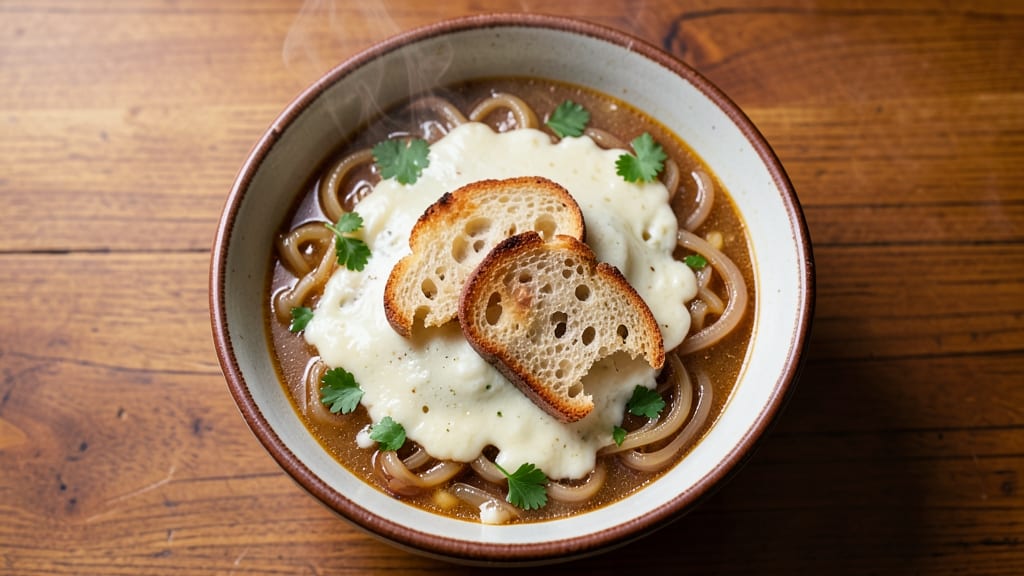
Julia Child's onion soup recipe transforms humble onions into a French bistro classic that's rich, aromatic, and topped with a golden, crispy cheese crust. The secret lies in slow caramelization and a proper roux that builds depth of flavor—techniques Julia herself perfected in her iconic kitchen.
This isn't just soup; it's a multi-layered experience that starts with layers of sweet, savory onions and finishes with a restaurant-quality crust.
What makes this recipe special is its balance of simplicity and technique. You'll begin by developing a rich, velvety base using a classic French roux and beef broth, then layer in caramelized onions that sing with sweetness.
The final step—topping with breadcrumbs and Gruyère—creates that signature crispy crust that Julia made famous, turning an ordinary bowl into something extraordinary. Every spoonful delivers that perfect harmony of textures and flavors.
By following Julia's method, you'll achieve a soup that's deeply flavorful yet approachable, perfect for a cozy weeknight dinner or an impressive gathering.
The slow cooking process allows the onions to transform into something sweet and complex, while the cheese crust adds a satisfying crunch that contrasts beautifully with the creamy broth. This is comfort food at its finest—warm, inviting, and packed with character.
The beauty of this recipe is its versatility. Serve it as a starter to impress guests or as a hearty main course with a side salad. The leftovers reheat beautifully, making it an excellent meal prep option for busy weeks.
With just a few key ingredients and Julia's trusted techniques, you'll create a dish that tastes like it came straight from a Parisian bistro.
Ingredients for julia child's onion soup
Six essential ingredients transform into Julia's iconic French bistro onion soup, where caramelized onions meet velvety broth and crispy Gruyère crust.
| Ingredient | Amount | Notes |
|---|---|---|
| Yellow Onions 🧅 | 3 lb | Thinly sliced, yellow or sweet variety |
| Unsalted Butter 🧈 | ½ cup | European-style preferred for richness |
| All-Purpose Flour 🌾 | ½ cup | Sifted for smooth roux |
| Beef Broth 🍲 | 6 cups | Homemade or high-quality store-bought |
| Dry White Wine 🍷 | ½ cup | Sauvignon Blanc or Chardonnay |
| Gruyère Cheese 🧀 | 1 ½ cups | Freshly grated, aged 12+ months |
| Panko Breadcrumbs 🍞 | ¾ cup | Japanese-style for extra crispiness |
| Fresh Thyme 🌿 | 2 tbsp | Leaves only, chopped fine |
| Fresh Garlic 🧄 | 4 cloves | Minced, peeled |
| Diamond Crystal Kosher Salt 🧂 | 2 tsp | For seasoning and roux |
| Black Peppercorns 🌶️ | ½ tsp | Freshly cracked |
| Extra-Virgin Olive Oil 🫒 | 2 tbsp | For finishing and drizzling |
The onions are the soul of this dish—yellow onions with their balanced sweetness and sharpness work best, though sweet onions add extra caramelization. For maximum flavor, buy them from a specialty grocer like Whole Foods or Eataly, where they're often fresher. Thinly slice them evenly for consistent cooking—about 1/8-inch thick—and don't crowd the pan. Julia herself swore by slow, patient caramelization, so resist the urge to rush. The butter should be European-style (like Plugrá or Bergère) for its higher fat content, which enhances the roux's richness. If you can't find it, use unsalted butter but clarify it first by melting and skimming off the milk solids for a smoother texture.
Substitutions must respect the dish's French foundation. No white wine? A splash of apple cider vinegar or lemon juice adds acidity, though it won't replicate the wine's complexity. Gruyère unavailable? Comté or Emmental work in a pinch, but avoid pre-shredded cheese—it lacks the melt and crisp you need. For the breadcrumbs, Italian-style panko adds extra crunch, but toasted sourdough croutons make a rustic alternative. Fresh thyme is ideal, but dried thyme at half the amount suffices if that's all you have. The garlic can be roasted for a sweeter note—simply wrap whole cloves in foil with a drizzle of olive oil and roast at 400°F for 10 minutes before mincing. Salt the broth generously but taste as you go; Julia often adjusted seasoning at the table.
This soup peaks after 3-4 days in the fridge, as flavors meld and the onions deepen in sweetness. Store in airtight containers with the crust intact to preserve crispiness—reheat covered on low heat, then broil for 2-3 minutes to restore the golden crust. Freeze portions without the topping; add fresh breadcrumbs and cheese when reheating. For serving, drizzle with extra-virgin olive oil and a sprinkle of freshly cracked black pepper—Julia's signature touch. The Gruyère crust can be prepped ahead and baked separately, then placed on top when serving. Portion into individual ramekins for elegant presentation, or serve family-style in a deep bowl for sharing.
Why You'll Love This Recipe
- One-Pot Magic: I swear by this recipe—just onions, butter, and a splash of wine. No chopping boards to clean, no extra pans. The onions caramelize right in the pot, and by the time you’re stirring in the flour, the kitchen smells like a Parisian bistro.
- Wine-Infused Depth: That white wine isn’t just for show—it cuts through the richness and adds a bright, almost floral lift. The beef broth deepens it into something hearty but never heavy, with a savory edge that makes you want to linger over the bowl.
- Weeknight to Dinner Party: Honestly, this is my go-to when I need to impress without stressing. For weeknights, I make a double batch and freeze half. For guests? The same recipe, but I top it with Gruyère and broil it until golden—suddenly, it’s fancy.
- Budget-Friendly Luxury: Onions are cheap, butter is versatile, and a bottle of wine stretches further than you’d think. The flour and broth are pantry staples, so this feels like a restaurant-quality meal without breaking the bank. (Yes, even on a Tuesday night.)
Step-by-step instructions for Julia Child's onion soup recipe
Master the French bistro technique that creates melt-in-your-mouth texture and caramelized depth.
Develop the Roux and Caramelize the Onions
Melt the 0.5 cup unsalted butter in a large Dutch oven over medium heat. Add the 3 lb yellow onions, sliced into even ¼-inch rounds, and the 4 cloves minced fresh garlic. Cook gently for 5 minutes to soften slightly before reducing heat to medium-low.
This is where patience pays off. Let the onions cook undisturbed for 45-60 minutes, stirring occasionally, until they transform into a deep golden caramel. You're aiming for a rich, jammy consistency—not crispy, but softened with concentrated sweetness. If they darken too quickly, reduce heat further. The onions should release their moisture and reduce to about 2 cups by the end.
Sprinkle 1 tsp diamond crystal kosher salt and half of the 0.5 tsp black peppercorns over the onions as they caramelize. This seasoning enhances their natural sweetness and prevents bitterness. When the onions are fully caramelized, whisk in the 0.5 cup sifted all-purpose flour to create a smooth roux. Cook for 2 minutes until the raw flour taste disappears.
Deglaze and Build the Broth Base
Pour in the 0.5 cup dry white wine and scrape up all the browned bits from the bottom of the pot. This deglazing captures all the onion flavor that would otherwise stick to the pan. Let the wine simmer for 3-4 minutes until completely evaporated.
Gradually whisk in the 6 cups beef broth, ensuring no lumps form. Bring to a gentle simmer and add the remaining 1 tsp diamond crystal kosher salt and remaining 0.5 tsp black peppercorns. Stir in the 2 tbsp chopped fresh thyme leaves. The soup should now be rich, velvety, and deeply aromatic. Let it simmer uncovered for 20 minutes to meld all the flavors together.
Here's the thing—don't rush this step. The prolonged simmering allows the onion flavors to fully develop and the broth to concentrate. You'll know it's ready when you can smell that unmistakable French onion aroma filling your kitchen.
Prepare the Cheese Topping
While the soup simmers, make the cheese topping by combining the 1.5 cups freshly grated gruyère cheese with the 0.75 cup panko breadcrumbs. This mixture should be coarse—don't pulverize the cheese. The texture contrast between the crispy topping and creamy soup is essential.
Spread the cheese mixture evenly over the surface of the soup in the Dutch oven. The key is to create an even layer that will crisp perfectly. Use a spoon to gently press it down so it adheres to the liquid below. This ensures maximum contact for that perfect melt.
Bake to Golden Perfection
Transfer the Dutch oven to a preheated 425°F oven and bake for 10-12 minutes. Watch closely—the cheese should turn a beautiful golden brown and develop a crispy crust on top. This is your signal that the topping is perfectly cooked.
Don't be tempted to peek too early. The heat from opening the oven door will cause the cheese to soften unevenly. When the top is golden brown and the cheese has melted completely through, remove from the oven. Let it rest for 5 minutes before serving.
This resting period allows the cheese to set slightly and the flavors to meld. The result should be a soup with a crispy, golden crust that contrasts beautifully with the creamy, caramelized onion broth beneath. Serve immediately with a drizzle of the 2 tbsp extra-virgin olive oil for added richness.
Pro Tips For Making Julia Child'S Onion Soup
- Sweat, Don’t Burn: Julia’s recipe calls for slow-cooked onions until they’re almost caramelized, but I learned the hard way that medium-low heat is your friend—high heat turns them bitter before they soften. Keep the lid slightly ajar to let moisture escape, and resist the urge to stir constantly (just give them a shake every 10 minutes).
- Bloom the Flour Right: When you toss in the flour, immediately add the wine and broth all at once—this prevents lumps and creates a silky roux. Stir like you’re angry for 2 minutes until the mixture thickens enough to coat the back of a spoon. (Yes, it’ll look like glue, but that’s the point.)
- Deglaze Aggressively: After the onions caramelize, don’t just splash in the wine—scrape every last bit of browned goodness from the pot with a wooden spoon. That’s where the flavor lives, and skipping it means a duller soup. (I used to skip this; now I don’t.)
- Simmer, Don’t Boil: Once the broth is added, keep the heat at a gentle simmer—no rolling boils, or the flour will break and turn your soup into glue. A steady, quiet bubble is all you need. (And yes, even if you’re impatient like me.)
Pro cooking tips for this dish
Slow Caramelization Mastery
Julia's secret lies in patient caramelization—the onions must cook for 45-60 minutes over medium-low heat until they transform into a jammy, golden mass. I use a heavy Dutch oven to distribute heat evenly and prevent burning.
The key is consistent stirring every 10 minutes to prevent sticking while allowing the natural sugars to develop. If your onions darken too quickly, reduce heat immediately—they should be deep amber with a sweet aroma, not burnt. 🌡️
Roux Perfection
The roux is the flavor foundation, so whisk in the 0.5 cup flour only after onions are fully caramelized. Cook for exactly 2 minutes—any longer risks a bitter taste. Julia insisted on a smooth, lump-free roux, so sift your flour first.
For extra richness, I sometimes add 1 tbsp butter at this stage to enhance the French bistro quality. Always taste before proceeding—properly made, it should be nutty and neutral, not raw.
Wine Deglazing
Don't skip the white wine deglaze—it captures all those precious browned bits (fond) that hold concentrated onion flavor. Use Sauvignon Blanc for its crisp acidity, which cuts through the richness. Let the wine reduce completely before adding broth—no residue should remain.
This step prevents a flat, one-dimensional soup. I like to add 1 tsp Dijon mustard here for a subtle depth that Julia often used in her French techniques. 🍷
Cheese Crust Secrets
The golden crust requires freshly grated Gruyère—pre-shredded won't melt properly. Mix it with panko breadcrumbs for texture, then press the mixture firmly onto the soup's surface. For extra crispiness, I broil for 1-2 minutes at the end if the oven-baked crust isn't brown enough.
The cheese should be evenly distributed—no thick spots that won't crisp. Julia's trick? Use a fine-mesh sieve to grate the cheese, creating uniform particles that melt beautifully.
Oven Temperature Control
Bake at 425°F—any hotter risks burning the cheese before it melts through. I place a tray of water on the lower rack to create steam, which helps the crust crisp evenly.
The soup should bubble gently when you check it—this indicates perfect doneness. Never open the oven door early—the temperature drop will ruin your crispy crust. A 5-minute rest after baking ensures the cheese sets properly before serving. ✨
Broth Concentration
Simmer the broth uncovered for 20 minutes to allow excess moisture to evaporate. This step intensifies the onion flavor and creates that signature velvety texture. Julia often added a bay leaf here, but I prefer fresh thyme for its bright aroma.
Taste before serving—adjust salt if needed, but remember the cheese topping will add saltiness. The broth should coat the back of a spoon with a smooth, glossy finish.
Nutrition facts
Frequently asked questions
Can I make this onion soup ahead of time?
Prepare the soup base up to the cheese topping stage, then refrigerate in an airtight container for up to 3 days. When ready to serve, bake the cheese topping fresh for that perfect crispy texture. For freezing, store the soup without the topping—add fresh breadcrumbs and cheese when reheating to maintain crispness.
What's the best way to caramelize onions for maximum flavor?
Julia's method requires 45-60 minutes of slow cooking over medium-low heat in a Dutch oven. Use yellow onions sliced into even ¼-inch rounds and stir occasionally to prevent sticking. The key is patience—the onions should transform into a jammy, golden mass with deep sweetness. Never rush this step!
Can I substitute Gruyère with another cheese?
While Gruyère is ideal, you can use Comté or Emmental for similar melting properties. Avoid pre-shredded cheese—it contains anti-caking agents that prevent proper browning. For extra richness, mix in a little Parmesan, but keep the total to 1.5 cups of cheese to maintain the right texture.
Why does my cheese topping get soggy?
Soggy topping usually means the cheese melted too quickly before crisping. Press the mixture firmly onto the soup's surface and bake at 425°F until golden brown. For extra insurance, broil for 1-2 minutes at the end. Also ensure your oven is fully preheated—cold spots cause uneven cooking.
What white wine works best for deglazing?
Use a dry Sauvignon Blanc or Chardonnay for its crisp acidity. Avoid sweet wines—they'll make the soup taste flat. If you don't have wine, substitute with apple cider vinegar or lemon juice, though the flavor won't be identical. Always let the wine reduce completely before adding broth.